Sargent Shriver’s Vision of Pluralism, Public Service, and Shared Humanity Continues to Inspire
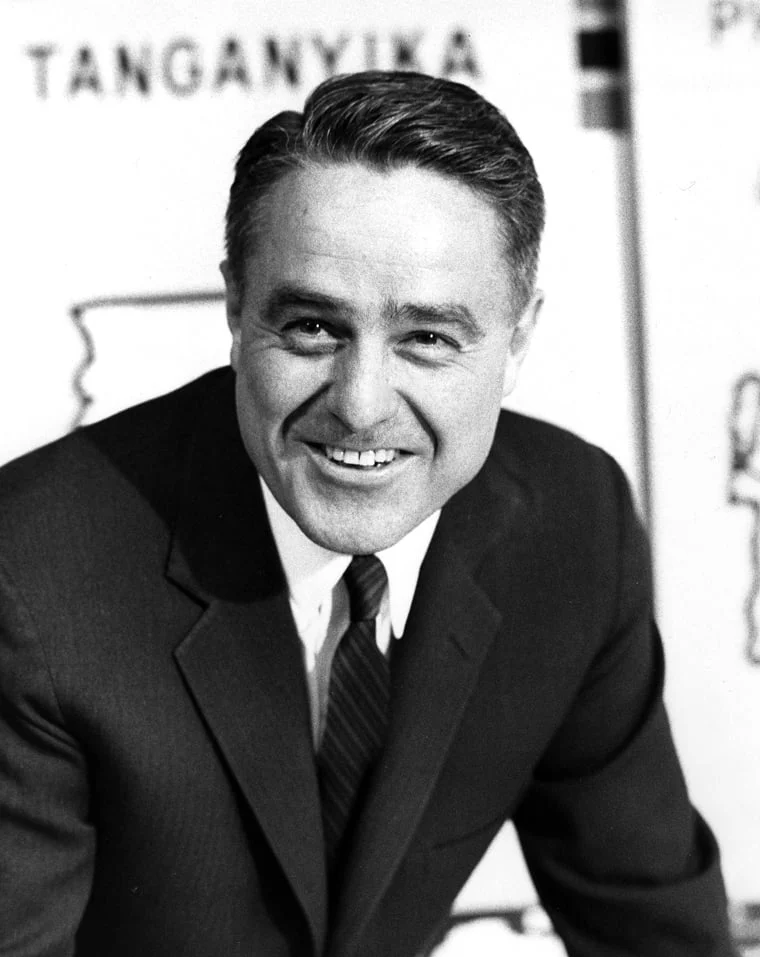
Decades after challenging a graduating class at Yale University to "break your mirrors" and turn their attention outward toward their neighbors, the legacy of Sargent Shriver remains a towering example of public service rooted in deep moral conviction, radical inclusivity, and an unwavering belief in pluralism. As the founding director of the Peace Corps, the principal architect of Lyndon B. Johnson’s War on Poverty, and the 1972 vice presidential running mate of George McGovern, Shriver spent his life translating high-minded ethical ideals into practical, large-scale institutions that fundamentally reshaped American society and international diplomacy.
In that memorable commencement address, Shriver offered a critique of cultural introspection that feels even more urgent in an era dominated by digital self-absorption. "In our society that is so self-absorbed, begin to look less at yourself and more at each other," he told the young people in attendance. "Learn more about the face of your neighbor and less about your own."
This outward-looking philosophy was not merely a rhetorical flourish; it was the natural outgrowth of a life deeply anchored in personal faith. Shriver attended Mass each morning, a daily ritual that grounded his identity, steadied his sense of purpose, and informed how he treated every individual he encountered. For Shriver, faith was never an insular exercise focused exclusively on personal salvation. Instead, it was an active, demanding mandate that compelled him to enter the public square to build community, advance systemic justice, and lift up the vulnerable members of society.
This approach aligns closely with the core tenets of Catholic social teaching, particularly the principle of participation. This doctrine holds that all people, by virtue of their equal and inherent dignity and worth, possess both the right and the responsibility to participate fully in the social, economic, cultural, and political life of their communities. Pluralism serves as the essential framework that facilitates and protects this broad-based participation, ensuring that power is shared and that diverse perspectives are welcomed rather than marginalized.
Shriver believed in a society where every voice counts, where participation is widespread, where our diversity is a source of strength.
Throughout his remarkable public career, Shriver consistently championed a politics of hope and mutual flourishing rather than one driven by fear and division. He envisioned a society where every single voice counts, where civic and economic participation is widespread, and where human diversity is recognized not as a threat, but as a fundamental source of strength and resilience.
This commitment to pluralism was not confined to abstract theory; it was demonstrated through concrete actions across multiple decades and high-stakes arenas. In Chicago during the tumultuous 1950s, serving as the head of both the Chicago School Board and the Catholic Interracial Council, Shriver successfully led critical efforts to desegregate the city’s public and Catholic school systems. Long before integration became a national imperative backed by federal mandates, Shriver was quietly and effectively dismantling racial barriers at the local level, bringing communities together across traditional divides.
His willingness to confront prejudice and champion justice extended to the highest levels of national politics. In October 1960, following the arrest of Martin Luther King Jr. in Georgia during a peaceful voter registration protest, Shriver played a pivotal behind-the-scenes role in shaping the presidential campaign of John F. Kennedy. Sidestepping cautious advisors who feared that reaching out to King would alienate critical white Southern voters and jeopardize the election, Shriver convinced Kennedy to place a direct phone call to Coretta Scott King. That call expressed genuine concern and offered moral support, marking a significant moment in the intersection of political strategy and civil rights advocacy.
When President Lyndon B. Johnson launched the War on Poverty in the mid-1960s and tapped Shriver to lead the newly formed Office of Economic Opportunity, Shriver brought this same philosophy of empowerment to federal anti-poverty programs. He insisted on building participatory processes that ensured people living in poverty were not treated merely as passive objects of state charity. Instead, they were positioned as protagonists in the story of their own lives, actively helping to shape the very initiatives, community action agencies, and institutions designed to foster economic dignity and upward mobility.
A similar ethos defined his tenure as the founding director of the Peace Corps. Rejecting top-down bureaucratic control, Shriver championed authentic, grassroots participation. The entire global enterprise was rooted in the radical proposition that regular people from entirely different cultural, economic, and geographic backgrounds could build lasting peace and justice through direct dialogue and daily cooperation. Shriver firmly believed that a genuine commitment to pluralism could do more than promote domestic flourishing—it could build vital global connections and bring nations together across ideological fault lines.
Later in life, Shriver joined forces with another titan of inclusion to create a more participatory society for one of the world’s most frequently marginalized populations. His wife, Eunice Kennedy Shriver, founded the Special Olympics during an era when individuals with intellectual and physical disabilities faced routine exclusion, institutionalization, and social isolation. The movement was designed to provide athletes with disabilities the opportunity to train, compete, build meaningful relationships, and demonstrate their athletic capabilities. In the 1980s, Sarge joined Eunice in helping to expand the Special Olympics globally, working tirelessly to demonstrate to a broader public that people with disabilities deserve full participation and inclusion in every facet of community life.
Shriver showed a consistent belief that every person matters, that we are all equal, and that we can work together without sacrificing who we are to build a pluralistic society where we can all flourish.
Across a lifetime defined by public leadership, activism, and institution-building, Sargent Shriver maintained a consistent, unyielding belief that every single person matters, that all human beings are fundamentally equal, and that diverse groups can work together collaboratively without sacrificing their unique identities. He demonstrated that it is entirely possible to construct a vibrant, pluralistic society where every individual has the opportunity to flourish.
The challenge he issued to the graduates at Yale decades ago remains equally vital today. As contemporary society navigates deep political polarization, social isolation, and cultural fragmentation, Shriver’s enduring message invites a return to the fundamentals of human connection, civic engagement, and mutual respect.
Let us break our mirrors and continue this essential work.
