Atlanta Faith-Based Nonprofit Steps In to House Senegalese Immigrants Amid Shifting Federal Funding and Rising ICE Arrests
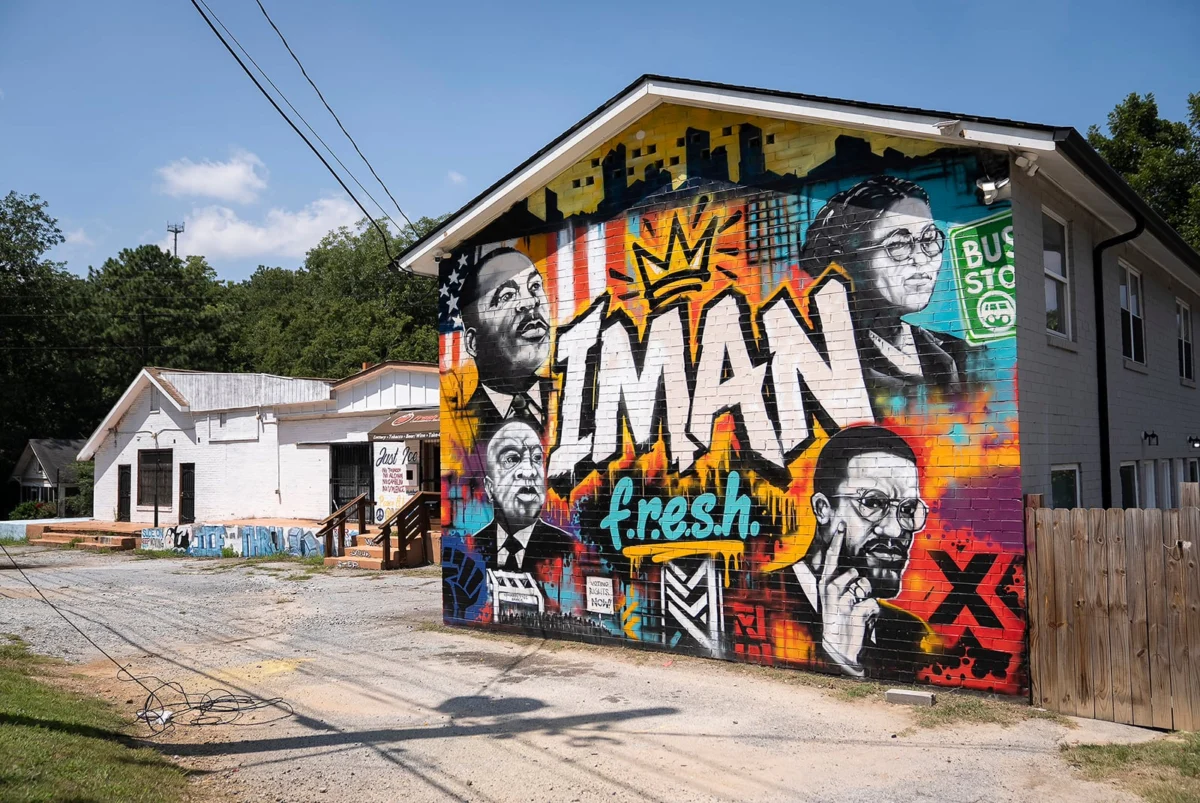
ATLANTA — When Mamdou Seck immigrated to the United States from Senegal in 2023, he arrived in Atlanta facing a daunting reality. Like many newly arrived migrants, he needed a safe place to live while simultaneously navigating the complex search for employment in an unfamiliar city. For Seck, stability arrived through the Inner-City Muslim Action Network-Atlanta (IMAN-Atlanta), a faith-based nonprofit organization that extended a lifeline when he had few other options.
Today, Seck shares an apartment complex known as Teranga Village with about a dozen other men, all of them fellow immigrants from Senegal. Launched in 2023, the IMAN program offers subsidized housing, essential food supplies, and vital assistance in connecting new arrivals with legal representation as they pursue their asylum cases. The complex’s name carries deep cultural significance: Teranga translates to "hospitality" in Wolof, one of the most commonly spoken languages in Senegal.
"If it wasn’t for IMAN, it would have been way more difficult to just kind of get on my feet," Seck, 34, said through a translator, reflecting on the foundation the organization provided. "They are providing a way for me to get stable."
A Community Response to an Urgent Shelter Crisis
The genesis of IMAN’s transitional housing program dates back to 2023, when the organization was directly approached by the Atlanta mayor’s office for assistance. According to estimates from local advocacy groups, hundreds of Senegalese immigrants had arrived in Atlanta after traveling through the southern border. Unable to find affordable housing or secure leases in a competitive rental market, dozens of newly arrived migrants were forced to spend their nights sleeping inside local mosques.
Tiffany Green-Abdullah, IMAN-Atlanta’s director of development, explained that the city government turned to IMAN and other nonprofit organizations to spearhead emergency resettlement efforts. While IMAN had no prior experience working specifically with newly arrived international migrants, the faith-based organization possessed deep, established expertise in integrating formerly incarcerated individuals back into society.
For years, IMAN’s flagship Green Re-Entry Program has offered transitional housing, comprehensive job training, and other supportive services for formerly incarcerated individuals—whom the organization refers to as "returning citizens."
"We knew we had a successful program. We thought we could integrate new [immigrants] with returning citizens — and it worked," Green-Abdullah said.
Currently, the faith-based nonprofit owns two distinct apartment buildings, utilizing one for each group. The living arrangement has fostered an unexpected cross-cultural community. The immigrants and returning citizens frequently volunteer together in the center’s community garden, an environment where Green-Abdullah notes the immigrants also practice and improve their English language skills. Furthermore, the returning citizens pass down vital "street smarts" to the new arrivals, advising them on practical matters such as where to spend their free time safely and which neighborhoods to avoid.
Navigating the Loss of Federal Grants
IMAN’s migrant housing program, which has the capacity to house up to 20 men at any given time, was created in large part due to a $603,026 grant from a federal program administered through the Federal Emergency Management Agency (FEMA). Under FEMA’s Shelter and Services Program, the Atlanta city government received the grant funds and distributed them to IMAN as the nonprofit submitted detailed receipts for covered operational costs, including food and shelter.
However, the financial landscape shifted dramatically following political changes in Washington. On the first day of his second term, President Donald Trump issued an executive order titled "Protecting the American People Against Invasion," which directed federal agencies to audit and scrutinize grants supporting immigrants. That directive effectively led to the premature termination of the FEMA grant program that IMAN had relied heavily upon to sustain its operations.
IMAN’s leadership estimates that the organization received approximately $250,000 of the promised $603,026 before the funding pipeline was cut off. To prevent the program from collapsing, the organization has had to rely on private charity and modest program fees to cover the mounting financial shortfall and keep the vital initiative operational.
During Ramadan in 2025, IMAN partnered with a local Islamic scholar and area mosques to spearhead a fundraising campaign that brought in more than $40,000 from Muslim donors. Green-Abdullah noted that these contributions were part of Zakat, the mandatory charitable giving required under the Islamic faith. IMAN applied these funds directly toward covering residents’ rent and food expenses, successfully closing an immediate budgetary gap following the federal grant cut.
To maintain long-term sustainability, IMAN also began charging residents a reduced rent of about $500 a month, with each apartment accommodating up to three people.
Cultural Bridging and a Grace Period for New Arrivals
The transitional housing provided by IMAN serves as a critical "grace period" for recent arrivals, according to Mohammed Ali, a case manager and chaplain who oversees the day-to-day operations of the program.
"They need that time to find their bearings," said Ali, who was hired the previous year in part because he is fluent in both Arabic and Wolof, allowing him to communicate directly with the immigrants in their native tongue.
Ali provides comprehensive support to the residents, assisting with grocery distribution, offering tailored job search advice, and establishing vital connections for legal aid. Beyond logistical support, he acts as a cultural interpreter, helping the men adjust to American social customs, such as maintaining eye contact during conversations or offering a firm handshake.
While some residents stay in the program for as little as two months until they accumulate enough savings to secure independent housing, others have remained at Teranga Village for more than a year.
The men participating in the program entered the United States under Biden-era immigration rules, strictly following the legal process for applying for asylum and, in many instances, successfully obtaining official work permits. Despite having legal status to work, finding stable long-term housing remains an uphill battle. Green-Abdullah pointed out that language barriers continue to hinder many of the men, while private landlords frequently exhibit reluctance to rent to tenants who possess only pending asylum status.
To circumvent these hurdles, IMAN-Atlanta has proactively built relationships with property managers at roughly five apartment complexes across the city who are willing to accept tenants from immigrant and formerly incarcerated housing programs, Ali said.
Other local organizations are also working to address the housing crunch. Inspiritus, an Atlanta-based social support organization, assists Senegalese immigrants in locating available apartments, while the Senegalese Community for Aid and Self-Development (SENCAD) helps cover the first few months of rent, according to Ismaila Fall, a spokesperson for the group.
Despite rising operational costs and the abrupt loss of federal funding, Ali emphasized that the organization remains deeply committed to supporting the immigrants, describing the work as "the pinnacle of what it means to be a Muslim."
Rising Uncertainty Amid Statewide Immigration Enforcement
For the residents of Teranga Village, however, the uncertainty extends far beyond the immediate challenges of housing and employment. Georgia has emerged as one of the top five states nationwide for federal immigration arrests, recording more than 13,600 confirmed arrests between January 2025 and March 2026, according to an analysis by The Atlanta Journal-Constitution. Immigration and Customs Enforcement (ICE) arrests surged further across the state over the summer months.
Koly Sissoko, a native of Senegal living at Teranga Village, said the climate of heightened enforcement has instilled fear in people he knows, leading some to isolate themselves indoors. He voiced deep frustration regarding the anti-immigrant rhetoric he frequently encounters online and in public discourse.
"People say immigrants are not good workers. That’s absolutely wrong," said Sissoko, who earns a living as a package delivery worker while diligently saving money to attend college and pursue his ultimate ambition of becoming a lawyer. "We’re just normal human beings. We’re not criminals."
