Defending the Name Muhammad: American Muslims Respond to Rising Islamophobia and Political Rhetoric
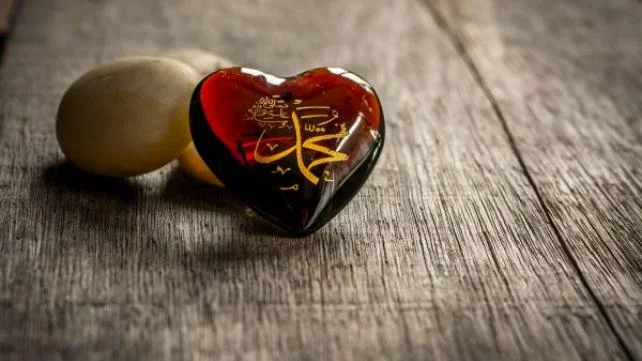
For Muslims around the world, the Prophet Muhammad occupies a place of supreme reverence, holding a position in their hearts that surpasses even their love for themselves and their families. It is a deeply ingrained tradition that adherents never speak or write his name without immediately following it with the invocation, "God’s peace and blessings be upon him."
Because of this profound devotion, it is a source of deep pain and distress for the community to witness a steady escalation of anti-Islamic rhetoric within the American political landscape. This environment of heightened Islamophobia has recently manifested in troubling institutional developments, most notably in Texas, where state education officials approved school curriculum updates that explicitly slander the Prophet Muhammad as "brutal."
The rhetoric has further intensified on the national campaign trail. During a political rally held inside an airport hangar in Dalton, Georgia, President Trump singled out Abdul Rahman El-Sayed, a Michigan Senate candidate, referring to him dismissively as "Mohammad." The former president told the crowd, "I’m the president. I can call you whatever the hell I want."
Elaborating on the remark, he added, "If you’re in doubt about somebody’s name from the Middle East, just say ‘Mohammad.’ You have about a 65% chance." He then pantomimed greeting individuals by saying, "Hello, Mohammad," and remarked, "I’ve done it for years now. I’ve never been wrong."
These successive developments—ranging from classroom curriculum decisions in Texas to public mockery by prominent political figures—have left many community members grappling with a pressing question: how to respond constructively to an environment where their faith and sacred figures are targeted for political point-scoring.
First, Check Your Own Heart
History demonstrates that the name Muhammad was targeted with mockery even during the Prophet’s own lifetime. The inhabitants of Makkah who fiercely opposed his message routinely refused to utter his actual name, instead twisting it into "Mudhammam," a derogatory term meaning "the one who is blamed."
According to accounts recorded in Sahih Bukhari, the Prophet’s response to these deliberate insults was remarkably composed and detached. He remarked to his companions, "Doesn’t it astonish you how Allah protects me from the abuse and curses of Quraish? They abuse Mudhammam and curse Mudhammam, whereas I am Muhammad." Because the insults were directed at a distorted caricature rather than his true identity, they failed to affect him.
Muslim leaders and counselors suggest that believers can carry that same calm into contemporary civic life. A derogatory remark made at a political rally cannot diminish a name that has been elevated by faith, especially when more than a billion people invoke peace and blessings upon him daily in their prayers.
Islamic teachings encourage believers to maintain their composure when confronted with hostility. The Quran describes the true servants of the Most Compassionate as individuals who remain steadfast and dignified amidst provocation, noting in Surah Al-Furqan: "The true servants of the Most Compassionate are those who walk on the earth humbly, and when the foolish address them improperly, they only respond with Salam."
Talking Points for Your Coworkers and Neighbors
In conversations with colleagues, neighbors, and acquaintances about these public incidents, community advocates recommend keeping dialogue concise and grounded in perspective. Rather than entering heated debates, individuals are encouraged to share brief, relatable thoughts and then listen to how others perceive the situation.
Dialogue can center on the universal importance of respect for personal names and heritage, emphasizing that civic discourse should rise above ethnic and religious stereotypes. By focusing on personal dignity and mutual understanding, community members can foster constructive conversations that bridge cultural divides rather than widening them.
The Greatest American Named Muhammad
Amidst contemporary political tensions, historians and cultural commentators point to a powerful historical precedent that highlights the enduring legacy of the name Muhammad in American culture: the life of Muhammad Ali.
In 1964, a young, rising boxing champion from Louisville, Kentucky, originally known to the world as Cassius Clay, captured the heavyweight title. Shortly after his historic victory, he announced his new name: Muhammad Ali. The decision was met with widespread resistance and controversy at the time. Many members of the public and media outlets flatly refused to use his chosen name, and some deliberately mocked it—mirroring the kind of casual disparagement seen in recent political rhetoric.
Ali steadfastly refused to back down. He retained his name, remained true to his faith, and ultimately transformed himself into one of the most beloved and celebrated athletes in global history. Decades later, in 1996, a massive crowd in Atlanta, Georgia, rose to their feet in thunderous applause as Ali stepped forward to light the Olympic flame. Observers frequently note the profound symbolism of that moment: the very state of Georgia, deep in the American South, once cheered wholeheartedly for a man named Muhammad carrying the torch for the entire world.
This legacy is receiving renewed attention with the premiere of a biographical television series titled "The Greatest," scheduled to debut on Prime Video. The series follows Ali’s extraordinary journey from his 1960 Olympic gold medal victory to his 1964 heavyweight title win—the monumental year he adopted the name Muhammad. Cultural educators suggest that watching such programming alongside friends or neighbors of different faiths can serve as a natural entry point for meaningful discussions about identity, conviction, and the rich history of American Muslims.
A Last Word
Public figures who resort to mocking sacred names or generalizing communities often rely on generating feelings of marginalization and smallness among minority populations. However, community leaders emphasize that individuals do not need to internalize this negativity.
Instead, American Muslims are encouraged to serve as the clearest proof of what their faith and heritage truly represent: honesty, kindness, bravery, and active service to their local neighborhoods. In the view of community advocates, living out these values with steadfast integrity provides an enduring response that no political joke or casual insult can ever dismantle.
