An Open Call for Solidarity: Interfaith Communities Respond to Rising Islamophobia and Rhetoric Targeting the Name Muhammad
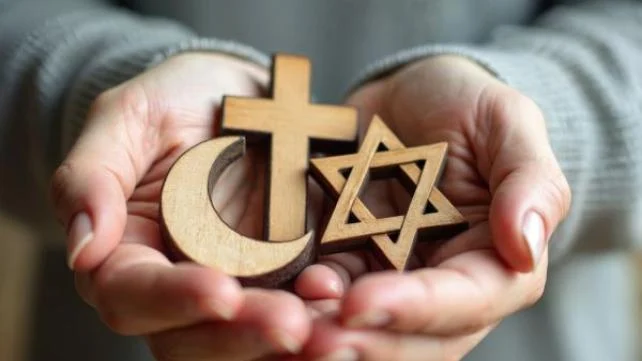
An open letter addressed to Christian, Jewish, and other faith-based communities across the United States is calling for robust solidarity with the nation’s Muslim population. The appeal comes in the wake of an environment that community leaders describe as having been purposely and artificially saturated with Islamophobia by bad-faith political actors.
The core of the appeal relies on a shared sense of reverence for sacred figures across the Abrahamic traditions. To illustrate the gravity of the rhetoric, the letter invites readers to imagine a public political crowd laughing openly at the name of Mary, Moses, or Joseph—names deeply held and frequently carried by loved ones at home, whether as a mother, a grandfather, or a son. For Muslim Americans, that hypothetical scenario became a reality following remarks made during a political rally.
According to reports from Reuters and regional media coverage, the incident occurred during a campaign event in Dalton, Georgia. At the rally, comments were made regarding how individuals might address someone from the Middle East whose name is unknown, suggesting a generalized and dismissive placeholder. The rhetoric subsequently turned toward a Muslim Senate candidate from Michigan, drawing attention to identity and names in a public forum.
While reporting from the event noted that the crowd’s immediate response was relatively muted—a silence that observers say speaks volumes—the psychological impact on Muslim communities has been profound. For many families, the name Muhammad is carried with deep affection and honor, named in reverence for the Prophet of Islam. Hearing that name treated as a punchline or dismissed lightly at a high-profile political gathering has left many feeling alienated, vulnerable, and hurting.
The Broader Context: Attacks on Muslims in the Name of Sharia
Community advocates emphasize that this incident did not occur in a vacuum. For months, Muslim Americans have increasingly found themselves framed as an inherent societal threat under the recurring banner of "Sharia law." Civil rights and advocacy groups point out that no American Muslim organization has ever petitioned the courts or legislature to replace established American legal frameworks with religious law. Yet, legislative proposals, public speeches, and political talking points continue to invoke the concept as an imminent danger, persistently manufacturing a sense of alarm.
When viewed collectively, these occurrences form a distressing pattern rather than isolated incidents. A casual dismissal of a revered prophetic name at a political rally, localized educational controversies characterizing religious figures in derogatory terms, and legislative measures designed to counter entirely nonexistent threats all converge on a singular, exclusionary message: that Muslims do not belong in the broader American fabric. Historians, theologians, and interfaith leaders alike have long recognized where such rhetoric inevitably leads if left unchallenged.
Muhammad Ali and the Meaning of a Name
To contextualize the cultural weight, resilience, and eventual acceptance associated with the name Muhammad, community leaders often look back to the legacy of legendary heavyweight boxing champion Muhammad Ali. When Cassius Clay formally adopted the name Muhammad Ali in 1964 upon embracing Islam, the reaction from much of the mainstream sports establishment and public was marked by hostility and rejection. Many commentators and fans flatly refused to use his chosen name, subjecting him to ridicule and institutional pressure.
The challenges intensified significantly in 1967 when Ali refused military induction based on his religious convictions and conscientious objection. As a consequence, he was stripped of his championship titles, banned from boxing during the prime of his athletic career, and threatened with imprisonment. His legal battle ultimately reached the United States Supreme Court, which ruled unanimously in his favor in 1971 in an eight-to-zero decision.
Decades later, public sentiment underwent a profound transformation. By the conclusion of his life, Muhammad Ali had achieved status as a universally beloved American icon, transcending sports, politics, and religion. He was chosen to light the Olympic flame at the 1974 Atlanta Olympic Games and was awarded the Presidential Medal of Freedom in 2005.
When Ali passed away in 2016, his memorial service in Louisville, Kentucky, was designed as a multi-faith gathering, incorporating Muslim, Christian, Jewish, and other religious leaders who took active parts in honoring his memory—a structure he had personally planned prior to his passing. The trajectory of his life demonstrated that a man bearing the name Muhammad could ultimately become a source of immense pride for the entire nation. His historical journey remains a touchstone for interfaith organizations seeking to foster meaningful dialogue regarding faith, identity, and human dignity in public life.
As interfaith dialogues continue across the country, Muslim communities and their allies are emphasizing the importance of mutual support and shared values. The ongoing appeals for solidarity stress that preserving the dignity of all citizens is essential to maintaining a pluralistic society. Leaders from various religious backgrounds continue to express gratitude for those who stand resolute against bigotry, reinforcing a mutual commitment to support one another through challenging social and political climates.
