New Research Validates Spinning Babies® Approach to Fetal Rotation During Labor
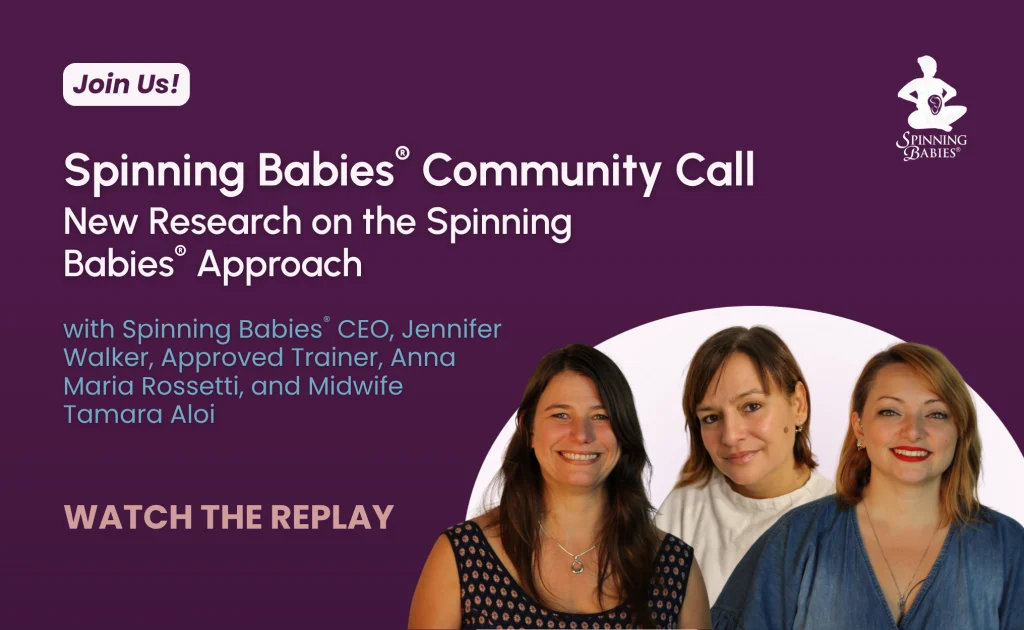
On November 5, 2025, the global birth community gathered for a pivotal virtual event hosted by Spinning Babies®. The Zoom-based community call brought together a distinguished panel—including CEO Jennifer Walker, Approved Trainer Anna Maria Rossetti, and midwife Tamara Aloi—to discuss the implications of a landmark study recently published in the European Journal of Midwifery. This peer-reviewed research marks a significant milestone for the organization, as it represents one of the first formal investigations to specifically analyze the efficacy of the Spinning Babies® framework in facilitating fetal rotation during labor.
For many professionals in the field, the publication of this study serves as a long-awaited validation of clinical observations. For years, midwives, doulas, and obstetric providers have applied the "Balance Before Force" and "Pelvic Levels Solutions™" frameworks with anecdotal success. The study finally provides a rigorous, scientific language to describe the patterns of physiological birth that providers have witnessed in delivery rooms worldwide. By bridging the gap between hands-on clinical practice and formal academic inquiry, the research offers a new foundation for understanding how the body can be supported to optimize fetal positioning.
A Collaboration Rooted in Real-World Practice
The origins of this study are deeply rooted in a professional partnership and a shared commitment to physiological birth. Anna Maria Rossetti, a Spinning Babies® Approved Trainer, has been instrumental in shaping midwifery education in Italy through her work at the Scuola Elementale di Arte Ostetrica (SEAO). Her efforts have long focused on the intersection of evidence-based practice and the natural mechanics of birth.
Rossetti and Tamara Aloi share a history that dates back to their time together in midwifery school. Their professional paths remained intertwined as they both cultivated a deep dedication to understanding the physiology of labor. The study was born from a transformative experience: after attending one of Rossetti’s Spinning Babies® workshops, Aloi began integrating these techniques into her clinical practice within a hospital setting. The results she witnessed—a noticeable shift in the ease and progression of labors—provided the empirical spark necessary to pursue formal research.
During the community call, the panel emphasized that this study is not merely an academic exercise; it is the culmination of real-world clinical application. By examining the results of these techniques in a hospital environment, the researchers were able to demonstrate the tangible impact of the Spinning Babies® approach. Jennifer Walker, CEO of Spinning Babies®, placed the study within the context of a broader, global movement. She noted that the healthcare community is increasingly shifting away from a model of "force"—where intervention is the primary tool for managing stalled labor—toward a model that honors physiological movement and recognizes the fetus as an active, capable participant in the journey through the pelvis.
The resonance of this message was immediate. During the call, the live chat function became a forum for collective affirmation, with providers from various corners of the globe sharing comments like, “Yes, this is what we see too.” This consensus highlights a growing professional realization that when the maternal pelvis is balanced and the baby is supported in navigating the pelvic levels, the need for surgical or mechanical intervention can often be reduced.
What the Study Shows: Evidence for Fetal Rotation
The core findings of the study offer compelling evidence regarding fetal rotation from occiput-posterior (OP) and occiput-transverse (OT) positions. In these positions, the baby’s head is oriented in a way that often results in longer, more difficult, and more painful labors, frequently leading to the use of medical interventions or cesarean sections.
The study found a significantly higher rate of rotation to an anterior position among those who received the Spinning Babies® approach compared to control groups who did not. This data adds substantial weight to the long-standing community understanding that the "Balance Before Force" framework is not just a theory, but a practical, effective method for assisting labor progression. By focusing on the soft tissues and pelvic alignment, providers can create the space necessary for the fetus to rotate into an optimal position, thereby facilitating a smoother descent through the birth canal.
For the international midwifery community, this research provides a vital tool for advocacy. Having peer-reviewed data published in the European Journal of Midwifery allows practitioners to communicate the value of physiological birth techniques to hospital administrators and medical colleagues who may require quantitative evidence before adopting new protocols. The study reinforces the premise that by preparing the maternal body through specific positioning and balancing techniques, the natural mechanism of birth is enhanced rather than overridden.
Accessing the Conversation and Resources
Recognizing the global interest in these findings, the organizers have made the full recording of the November 5th event available to the public. The primary recording is presented in Italian, reflecting the origin of the research, and includes English captions for accessibility. In addition to the full-length session, the organization has provided a highlights video specifically for English-speaking audiences, condensing the key takeaways and the panel’s most significant insights into a more digestible format.
For those interested in reviewing the discussion, the full recording can be found on YouTube at https://www.youtube.com/watch?v=RfQAjQRwmOc. The English highlights are also available at youtu.be/HyJEtuho3bw?si=odpIYJSt2Q7ScADF.
The organization has taken steps to ensure that the material remains accessible to as many people as possible. Viewers who wish to utilize captions or translations can easily do so through the YouTube interface. By selecting the settings icon on the video player, users can access the "Subtitles/CC" menu, where they can turn on captions and use the "Auto-translate" feature to view the content in their preferred language. This commitment to accessibility underscores the organization’s desire to keep the global conversation on physiological birth as inclusive as possible.
Moving Forward: The Future of Physiological Birth
The event concluded with an expression of gratitude toward the community that has supported the growth of the Spinning Babies® approach over the years. By engaging with new research and sharing their real-world experiences, birth professionals are helping to redefine the standards of care in maternity units around the world.
As the medical community continues to process the results of this study, the hope among the panel members is that it will encourage more hospital-based providers to explore the benefits of non-invasive, physiology-based techniques. The study acts as a bridge between the traditional wisdom of midwifery and the modern demands of evidence-based medicine. Whether one is a seasoned practitioner or a student just beginning their journey, the conversation surrounding fetal rotation and pelvic health remains one of the most critical areas of development in contemporary obstetrics.
The organization remains dedicated to fostering this growing dialogue. As more data is gathered and more practitioners share their success stories, the collective understanding of how to support the birthing body will continue to evolve. This milestone is not the end of the research, but rather an invitation for further study and continued integration of these techniques into standard practice. For now, the birth community has a verified, peer-reviewed piece of evidence that confirms what many have known for years: when we prioritize balance and respect the physiology of the fetus, we create the best possible conditions for birth.
