Beyond the Toy Box: Why Families Are Embracing the Minimalist Play Movement
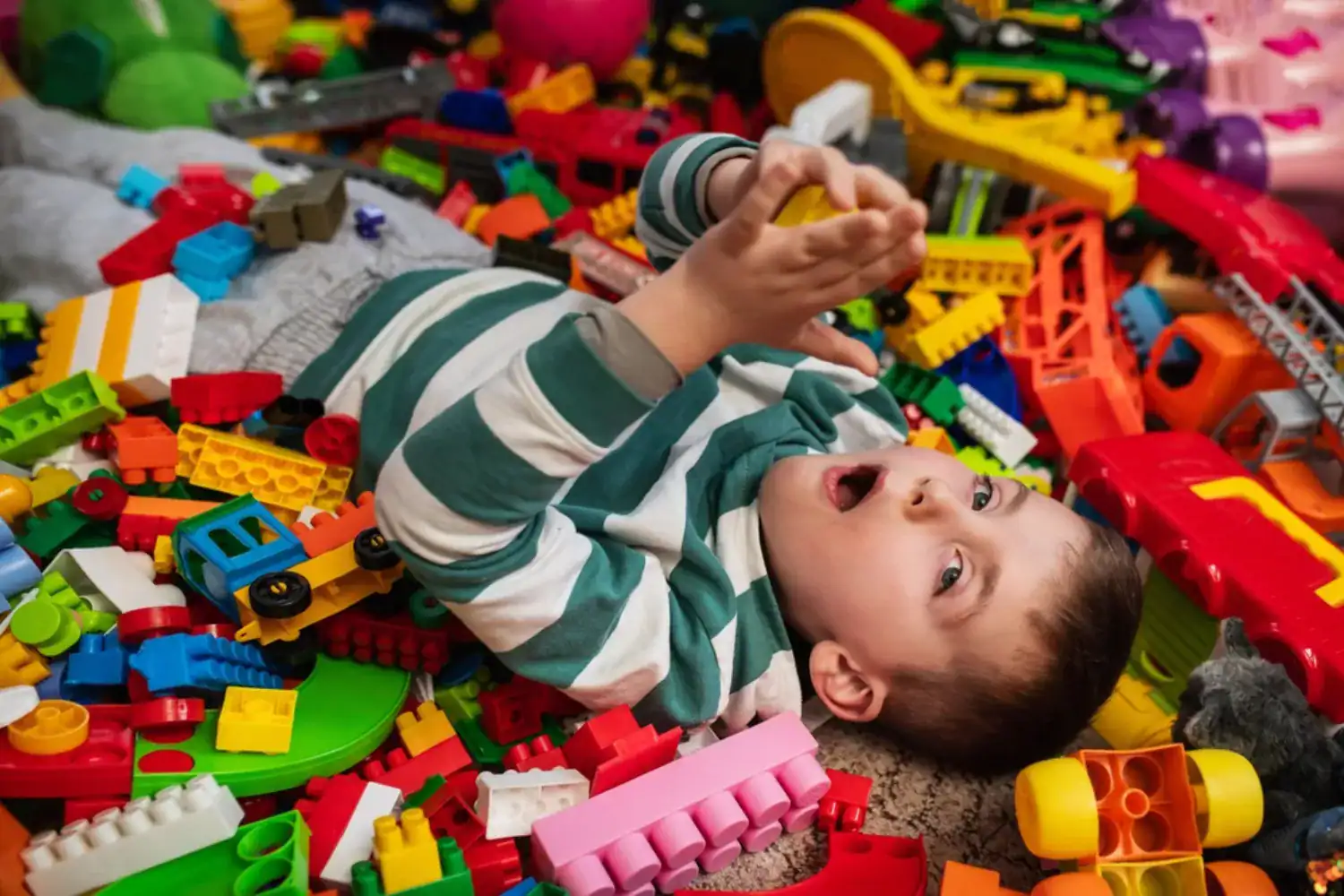
Researchers and parents alike are increasingly identifying modern children’s toys as a primary, yet frequently overlooked, catalyst for sensory overload, domestic clutter, and even long-term behavioral patterns. While contemporary parenting discourse often focuses on adding structure, scheduling more time outdoors, increasing discipline, or purchasing specialized sensory-sensitive playthings, a growing contingent of families is discovering that the most effective intervention is remarkably simple: subtraction.
The rising movement toward toy minimalism challenges deeply ingrained Western consumption habits. By scaling back the volume of playthings inside the home, families report a surprising shift—children display heightened creativity, engage more deeply with real-world activities, and exhibit calmer, more focused dispositions.
Do kids need a lot of toys?
The cultural contrast of childhood possessions became strikingly evident through the work of Italian photographer Gabriele Galimberti. Between 2009 and 2010, Galimberti traveled to more than 50 countries, documenting children alongside their most treasured belongings. His resulting project, Toy Stories, captured young subjects beaming with joy surrounded by their favorite items. While the collection has frequently been praised as a thoughtful commentary on cultural diversity, wealth disparities, and global economics, the underlying visual takeaway for many observers was one of profound uniformity.
Regardless of geographic location or socioeconomic standing, the sheer volume of possessions in these international photographs was markedly lower than what has become standard in many Western, particularly American, households.
For parents navigating the physical and mental demands of modern child-rearing, the accumulation of playthings often transforms into a persistent daily burden. The endless cycle of picking up items, negotiating cleanup, and navigating cluttered living spaces can take a significant toll on parental mental health. Traditional solutions—such as donating items, finding alternative storage, or requesting that family members stop purchasing gifts—frequently fall short against a relentless tide of incoming consumer goods.
This dynamic reflects a broader national imbalance. Statistical insights reveal that the United States accounts for approximately 3% of the world’s children yet consumes roughly 40% of global toy production. As this disparity becomes increasingly visible, many households find themselves searching for a manageable path backward from normalized excess, recognizing that the current baseline of material accumulation has far outpaced developmental necessity.
Do kids need to play?
Child development experts emphasize that while children inherently require play to thrive, the presence of an overwhelming quantity of items often impedes the natural play process. In fact, observational evidence suggests that fewer toys foster superior engagement and imagination.
Recent developmental research has begun to examine the direct correlation between toy saturation, heightened stress levels in children, and the compromised mental health of primary caregivers. Controlled observations have demonstrated that toddlers exhibit more sustained attention spans and more sophisticated play patterns when presented with a minimal selection of items—such as four choices rather than sixteen—compared to rooms filled with dozens of distractions.
Historical precedents further support this approach. In the 1980s, German researchers studying the roots of chronic distraction and addictive behaviors in later life implemented an experimental curriculum in local kindergartens. By systematically removing standard playthings from the classrooms, educators observed remarkable improvements in children’s focus, social interactions, and self-regulation.
Parenting specialists often note that while individual commercial products frequently market themselves as educational tools designed to teach engineering, spatial awareness, or empathy, an overabundance of items collectively generates the opposite effect. Instead of fostering growth, a saturated environment contributes to chronic distraction, sensory fatigue, and an early orientation toward consumerism.
What counts as a toy?
Transitioning toward a minimalist play environment often mirrors dietary adjustments—the objective is not the total elimination of specific categories, but rather the reduction of a debilitating overabundance. Just as a whole-food diet accommodates natural elements like fresh produce while excluding processed items, a minimalist approach to play distinguishes between open-ended developmental staples and hyper-specific, electronic novelties.
Families undertaking this shift typically retain versatile items that encourage open-ended imagination, such as basic building blocks, magnetic tiles, construction sets, art supplies, books, puzzles, dress-up clothes, and outdoor equipment like bicycles. Conversely, possessions designated for removal frequently include single-purpose electronic gadgets, plastic miniature kitchen setups replete with hundreds of tiny accessories, oversized plastic vehicle collections, and automated musical toys engineered to loop repetitive sounds.
When these specialized, high-stimulus items are removed from the environment, caregivers frequently observe a spontaneous shift in children’s behavior. Rather than relying on simulated versions of adult activities, children naturally gravitate toward authentic participation—assisting with real food preparation in the kitchen, engaging with actual acoustic or rhythm instruments, and taking on active roles in household responsibilities such as pet care.
A toy-free experiment to try
For families overwhelmed by domestic clutter, periods of transition such as summer break often provide an ideal opportunity to reevaluate household routines, as children naturally seek out outdoor activities and self-directed boredom solutions. Implementing a major reduction in possessions does not require immediate permanence, but rather functions as an exploratory trial period.
The process typically begins with an open conversation between parent and child. Rather than arbitrarily discarding possessions, children are invited to select a small, manageable number of favorite items to keep readily accessible in the living areas. The remaining inventory is then relocated to temporary storage—such as a garage, attic, or basement—where items remain retrievable should a genuine attachment surface over the following weeks.
During a trial period lasting several weeks or months, families routinely assess changes in domestic atmosphere, sibling dynamics, and individual focus. In many instances, children display little to no interest in retrieving the stored items, experiencing immediate relief from the ambient sensory clutter. For older children, surplus items that successfully pass through the trial phase can eventually be re-homed through donations or community sales, allowing children to participate directly in the curation of their living spaces and the mindful management of their personal environments.
