Remembering Dolores Huerta: A Legacy of Moral Courage, Intersectional Justice, and Hope
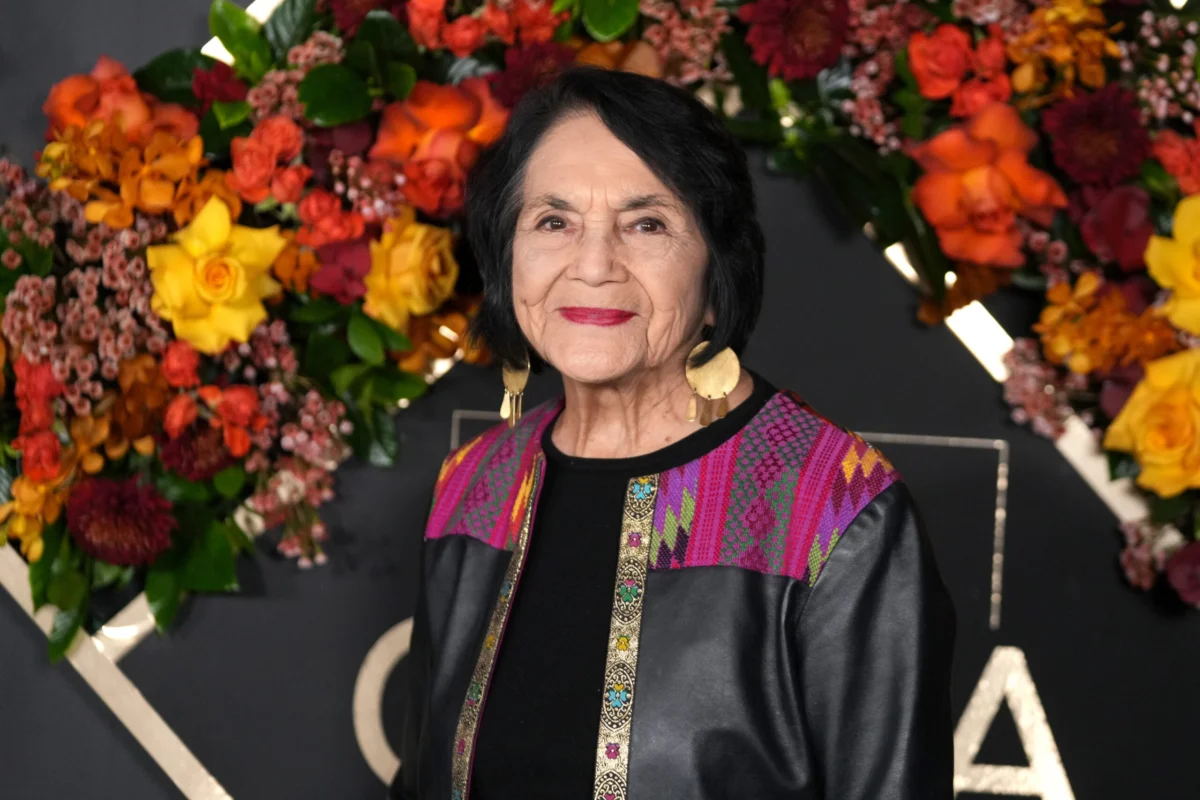
When news broke of the passing of legendary civil rights icon Dolores Huerta at the age of 96, it prompted deep reflection among advocates, organizers, and community leaders across the nation. For many who have dedicated their lives to social change, Huerta was not merely a historical figure from the textbooks; she was the architect of a framework for justice that continues to guide modern advocacy.
Before transitioning to her current role at Interfaith America, an author and longtime environmental advocate spent more than a decade fighting on the front lines for the health of both people and the planet. Reflecting on those years of organizing, the writer noted that Huerta was the one who taught a generation of activists how to see the vital connections that others routinely missed. In an era where social movements are frequently siloed into distinct categories, Huerta’s life and career serve as a masterclass in holistic, interconnected advocacy.
Justice in Practice
Long before intersectionality became a widely accepted academic and political term, Dolores Huerta was living it out in the fields, city streets, and legislative halls. She fundamentally understood that workers’ rights, environmental health, economic opportunity, voting rights, and basic human dignity could never be treated as separate, isolated issues. Instead, she viewed them all as inextricably linked components of a single, unified fight for comprehensive justice.
To the general public, Huerta is universally recognized as the co-founder of the United Farm Workers alongside Cesar Chavez, and as the visionary woman who gifted the movement its enduring rallying cry: "Sí, se puede"—"Yes, we can." Yet, as time passes and the challenges facing social justice movements evolve, contemporaries and younger generations alike appreciate her legacy not only for her monumental accomplishments, but equally for the profound moral courage it required to achieve them.
Huerta dedicated every waking decade of her life to standing shoulder-to-shoulder with people who had been systematically exploited, overlooked, or dismissed by the power structures of society. She fought tirelessly for agricultural laborers toiling under dangerous and inhumane conditions, for women demanding an equitable voice in public life, for immigrants striving to build a future and pursue opportunity, and for marginalized communities demanding fundamental dignity and respect.
Through every campaign, she maintained a steadfast understanding that true justice is never something graciously handed down from those in positions of power. Rather, she taught that justice is something people must build together through relentless perseverance, personal sacrifice, and unyielding solidarity. She organized communities, she listened to the grievances of the working class, she openly challenged entrenched institutional authorities, and most importantly, she helped ordinary, everyday people recognize and wield their own collective power.
Hope in Cooperation
Even as she fundamentally altered the course of American history and labor relations, Huerta never divorced the arduous work of pursuing justice from the vital presence of hope. She spent decades confronting staggering, entrenched inequities yet never seemed to lose faith in the inherent goodness of people or the ultimate possibility of transformative societal change. Her optimism was not rooted in a naive belief that progress was somehow inevitable; rather, it stemmed from her profound trust that ordinary people were always fully capable of creating progress themselves.
At Interfaith America, leaders frequently emphasize the critical importance of building strong relationships across deep lines of difference. Experience has shown that a healthy, functioning democracy depends entirely on human beings finding practical ways to work together, even when they do not share the same cultural background, religious beliefs, or personal life experiences. In many profound ways, Huerta spent her entire life modeling precisely that ethos. She skillfully brought together laborers, faith leaders, university students, secular activists, and diverse community members around a shared, inclusive vision of justice and economic opportunity.
Her enduring example serves as a powerful reminder that all meaningful social change begins with the simple yet radical act of recognizing one another’s inherent human dignity. That change grows organically when societies refuse to accept systemic injustice as simply "the way things are" and instead commit themselves to building something better through collective action.
As communities remember Huerta’s remarkable life, deep gratitude is expressed for the clear path she forged for the countless advocates, grassroots organizers, and community builders who followed in her footsteps. Her life remains an indelible reminder that genuine courage and deep-seated compassion must always belong together, and that the tireless pursuit of justice is, at its core, an ultimate expression of hope.
Respect for Diversity
At their absolute best, religious and philosophical faiths call humanity to recognize the sacred dignity of every single person and to accept our mutual responsibility toward one another. Huerta intuitively understood that true solidarity goes far beyond a calculated political strategy. For her, it was a profound moral commitment to stand firmly with our neighbors, particularly those whose voices have been systematically excluded from the halls of power.
In a modern world often defined by deep political and social divisions, her legacy reminds humanity that lasting, systemic change is never built overnight. Instead, it is constructed slowly and deliberately through human relationships, a shared sense of purpose, and the foundational belief that our communities are infinitely stronger when every individual truly belongs. As the nation mourns her passing, supporters are called to honor her memory by actively carrying forward that shining spirit of justice, hope, and solidarity.
Reflecting on her lifelong philosophy, Dolores Huerta once left the world with words that continue to inspire new generations of change-makers: "Every moment is an organizing opportunity, every person a potential activist, every minute a chance to change the world."
For those wishing to learn more about her enduring impact and the ongoing mission of her organization, further information is available through the Dolores Huerta Foundation.
