How L.M. Montgomery’s Anne of Green Gables Transformed a Mother’s Perspective on Parenting and Homeschooling
By Jamie C. Martin
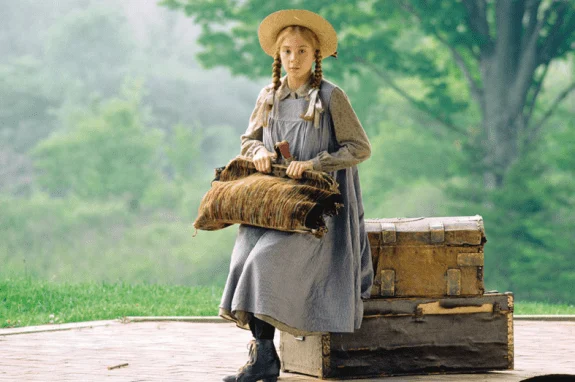
For generations, readers around the world have fallen under the spell of a talkative, red-headed orphan with an overflowing imagination and an unapologetic penchant for drama. Written by Canadian author L.M. Montgomery, Anne of Green Gables has long been celebrated as a timeless classic of children’s and young adult literature. But for many readers, the relationship with Anne Shirley—always insistent on the "e" at the end of her name—extends far beyond childhood nostalgia. For Jamie C. Martin, editor of Simple Homeschool, revisiting the beloved novel as an adult with three children of her own sparked a profound shift in her approach to parenting and education, offering a timely reminder to loosen up and let the natural magic of maturation take its course.
Reflecting on her early years, Martin recalls spending countless hours influenced by the spirited heroine. Those formative reading sessions did more than just provide a series of exciting fictional adventures; they planted seeds that would eventually shape her real-world trajectory. Looking back, Martin notes that the character helped foster deep-seated personal values, including a love for books, a passion for writing, a future path toward adoption, and an enduring disposition as a starry-eyed dreamer.
As a teenager and young adult, Martin devoured the entire Anne of Green Gables series multiple times, alongside virtually any other title by L.M. Montgomery she could find. The author’s unique voice and vivid descriptions resonated deeply with her youthful worldview. However, years later as a newly married adult, Martin experienced an even deeper literary impact when she turned to the published journals of L.M. Montgomery across five extensive volumes.
Unlike the whimsical optimism of her fictional works, Montgomery’s personal journals offered a starkly grown-up perspective. They revealed a complex tapestry of life where profound joy intersected with deep sorrow, and happiness existed side-by-side with heartbreak. For a reader who had grown up idealizing the world of Green Gables, encountering the author’s real-life struggles meant she could never look at Anne quite the same way again. Yet, even through the lens of adult reality, Anne Shirley proved she still had valuable lessons to impart.

Drawing on literary advice suggesting that readers approach classic texts with a specific life question in mind, Martin decided to re-read Anne of Green Gables through the eyes of a parent. With three children to raise and the daily responsibilities of homeschooling, she posed a direct question to the text: What can a parent learn from this enduring story about a famously mischievous orphan?
The answer she discovered, and one she has actively tried to implement in her own home ever since, centers on a simple yet challenging concept: loosening up and allowing maturity to do its work.
Throughout the novel’s early chapters, a young Anne is a constant source of commotion, frequently finding herself embroiled in various forms of trouble. From inventing elaborate fictional stories to accidentally dyeing her hair an unintended shade of green, tumbling off a roof’s ridgepole, or inadvertently intoxicating her bosom friend, Diana Barry, with homemade currant wine, Anne’s childhood is defined by a whirlwind of high-spirited misadventures.

Alongside her mischief, Anne possesses a fierce, unbridled temper. This explosive side is famously on display when she shatters her school slate over the head of classmate Gilbert Blythe after he mocks her signature red hair. Although Gilbert immediately attempts to make amends, Anne demonstrates a stubborn streak and an absolute refusal to forgive quickly. In one memorable scene, Gilbert slips a pink candy heart bearing the message "You are sweet" under Anne’s arm at school. Rather than accepting the gesture, Anne gingerly picks up the candy with the tips of her fingers, drops it to the floor, grinds it to powder beneath her heel, and completely ignores him.
Yet, the core of the narrative relies on the gradual transformation fostered by her adoptive guardians, the stern and introverted Marilla Cuthbert and her gentle brother, Matthew. Despite Anne’s frequent behavioral outbursts, Marilla gradually softens. Following the slate-breaking incident, Marilla takes practical advice from the community and permits Anne to temporarily stay home from traditional school—effectively pioneering an early form of homeschooling—allowing her to learn her lessons domestically, complete her chores, and spend autumn evenings playing with Diana.
Beneath Anne’s turbulent behavior and continuous mishaps lay genuine genius: a boundless imagination, fierce creativity, sharp intelligence, and a resilient character. These traits simply required time and patience to find their proper expression. In the fullness of time, that chaotic energy blossomed into brilliance.

Reflecting on this gradual transformation, Martin connects Anne’s fictional upbringing to modern insights on child development, such as those found in the book Unschooling Rules: 55 Ways to Unlearn What We Know About School and Rediscover Education. As noted in the book’s chapter on the power of maturation, the erratic and often irrational behavior of teenagers naturally transitions into focus and calmness over time. Childhood is inherently characterized by alternating cycles of equilibrium and disequilibrium, driven by internal developmental clocks that rarely align neatly with rigid societal structures and expectations.
For modern parents and educators, particularly those navigating the intense daily environment of homeschooling, the comparison offers a compelling mirror. It raises an important question for families feeling the strain of educational pressure: Has the pursuit of academic and behavioral standards made parents too tense or overly stern?
By choosing to trust the developmental process, parents might find the emotional space to relax, share a laugh amidst the inevitable daily mischief, and truly enjoy the journey of raising children. As the underlying philosophy of the narrative suggests, a little genuine appreciation can often achieve just as much positive growth as all the conscientious upbringing in the world.
