Why Bina Roklov Steals the Show in Netflix’s ‘Nobody Wants This’
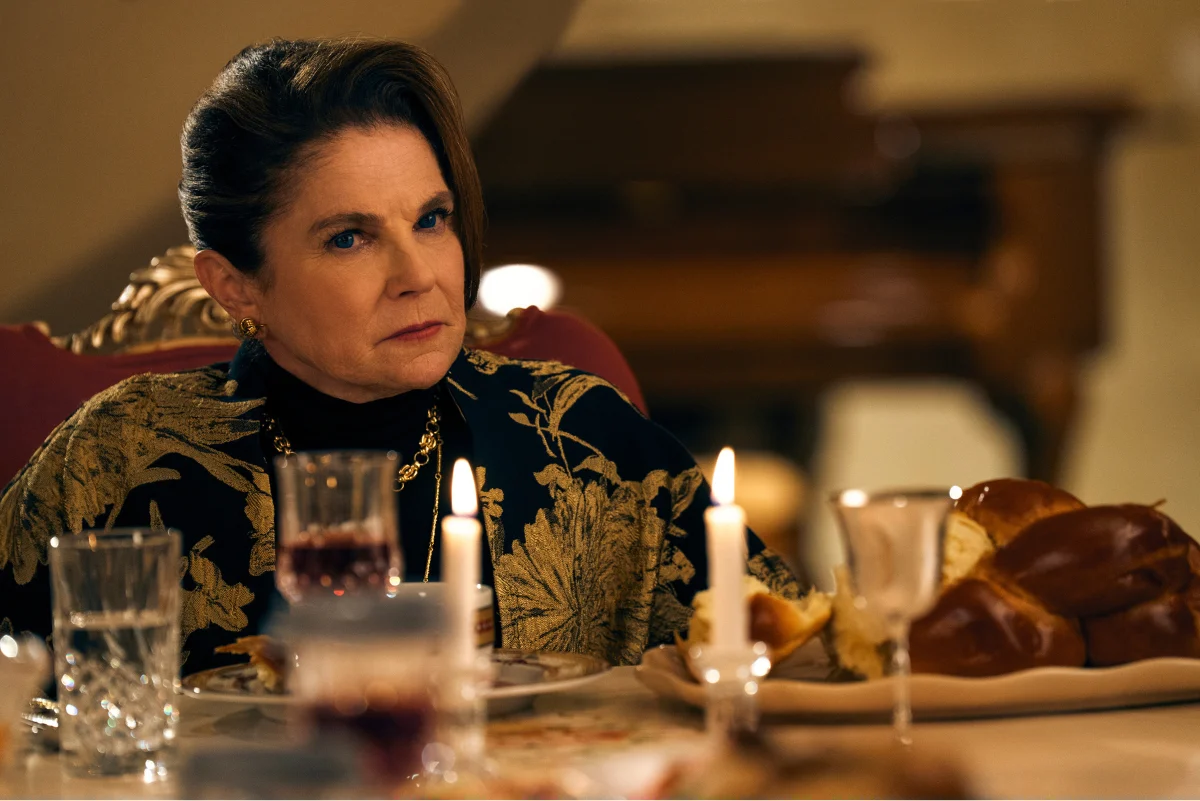
While many viewers tune into the hit Netflix series Nobody Wants This for the magnetic charm of the show’s resident "Hot Rabbi," a growing faction of the audience is showing up for a completely different reason: his mother.
Bina Roklov, brought to life with pitch-perfect comedic timing and commanding screen presence by veteran actress Tovah Feldshuh, steals nearly every scene she occupies across the show’s first three seasons. With her expertly timed one-liners, deeply expressive looks of disapproval, and larger-than-life personality, Bina embodies an overbearing Jewish mother stereotype. Yet, Feldshuh infuses the character with such a gloriously unapologetic spirit that the role transcends cliché, transforming into something uniquely compelling.

Feldshuh’s performance builds upon a remarkable, decades-long career on stage and screen. Notably, she originated the role of Yentl on Broadway in 1975, eight years before Barbra Streisand brought the character to the cinematic screen. Her impressive resume also includes portraying former Israeli Prime Minister Golda Meir in Golda’s Balcony, alongside memorable turns as matriarchal figures in Kissing Jessica Stein and Crazy Ex-Girlfriend.
In Nobody Wants This, Bina is introduced as a Soviet Jewish immigrant with a thick Russian accent. Married to Ilan, played by Paul Ben-Victor, she shares a complex family dynamic with her sons, Noah, played by Adam Brody, and Sasha, played by Timothy Simons. While the series offers viewers only glimpses into Bina’s backstory as an immigrant, Feldshuh anchors the character with the emotional weight of decades of Jewish life, resilience, and family traditions.
Across the series, several standout moments define Bina’s unforgettable presence, showcasing her unmatched ability to command a room with a single word or look.

Establishing the Matriarchal Force
Sometimes a television character requires an entire introductory episode to establish their footing, but Feldshuh accomplished the feat with just two words early in the series.
When Joanne, played by Kristen Bell, arrives unexpectedly at the synagogue as Rabbi Noah’s new non-Jewish love interest, his sister-in-law Esther, played by Jackie Tohn, asks who the stranger is. Bina delivers an immediate, razor-sharp assessment: "A shiksa."
The brilliance of the moment lies entirely in Feldshuh’s delivery. Without missing a beat, she manages to convey an entire spectrum of simultaneous emotions, blending profound shock, deep suspicion, and classic maternal disapproval into a single unforgettable line.

The tension between Bina and Joanne deepens in a later episode when Joanne visits Bina’s home bearing a fancy charcuterie board featuring prosciutto. As a rabbi’s mother, Bina reacts with absolute horror at the presence of pork under her roof, instantly declaring the entire platter tainted and sentencing it to the trash bin.
However, the power dynamic shifts when Joanne catches Bina secretly sneaking bites of the very prosciutto she had just condemned. Armed with this playful leverage, Joanne temporarily gains the upper hand. Yet, Bina recovers with characteristic poise. By the end of the episode, she flashes a smile and tells Joanne that she likes her much more than anticipated, before leaning in to whisper a sobering reminder that she will never ultimately end up with her son.
Commanding the Court and the Table
Bina’s ability to dominate a scene extends far beyond domestic squabbles, often spilling out into public spaces with cinematic flair.

During an outing at Noah and Sasha’s local basketball game, Feldshuh delivers what stands as one of the most memorable entrances of the second season. Strutting onto the court wearing dramatic sunglasses and a popped collar, she commands every eye in the gymnasium to the tune of Fergie’s "London Bridge." The comedic impact is heightened by the reactions of Noah and Sasha—two grown men who appear genuinely and hilariously terrified by their mother’s sheer presence.
Back at home, Bina’s authority is celebrated through rich cultural touchstones. During a Friday night Shabbat dinner in the Roklov household, she takes center stage. Dressed in a bold outfit with every hair immaculately in place, she leads the traditional Hamotzi blessing with gusto, her voice rising above the chatter of the family table.
Directing Joanne to her proper seat and enforcing the household rule against using phones at the table, Bina embodies the quintessential Jewish matriarch. Feldshuh’s portrayal feels entirely authentic, drawing naturally upon her own upbringing in Scarsdale, New York, where Friday night family dinners were a staple of her youth.

Softer Edges and Lasting Impressions
As the series progresses into its third season, the relationship between Bina and Joanne undergoes unexpected shifts. When Joanne finds herself worried about being perceived as a professional liability to Noah’s career, she turns to the one person she knows can help navigate the complexities of the community: Bina.
A visit to Bina’s stately home offers a rare, unguarded glimpse of the matriarch before she is fully dressed for the public eye. Wearing a simple champagne-colored satin blouse and applying her own makeup without her signature elaborate brooches, Bina listens to Joanne’s request. With a mischievous twinkle in her eye, she accepts the challenge and boldly declares her intention to transform Joanne into a rebbetzin, practically kvelling at the prospect of taking her son’s partner under her wing.
Even in moments of psychological leverage, Bina’s methods are uniquely memorable. While standing near the family’s backyard basketball court, she reminisces about Noah’s childhood hamster—which, fittingly, possessed a Hebrew name. The memory turns into a classic guilt trip when Bina reveals that the pet was buried nearby so it could always watch Noah play, using the sentimental story to subtly tug at her son’s heartstrings.

As Nobody Wants This continues its television run, characters like Bina demonstrate the enduring appeal of deeply textured, unapologetic family representation on screen. Whether she is doling out sharp rebukes, leading sacred traditions, or weaponizing childhood memories, Bina Roklov remains a central pillar of the series, leaving audiences eager to see where her formidable presence will lead next.
