Why Tovah Feldshuh’s Bina Roklov is the True Breakout Star of Netflix’s ‘Nobody Wants This’
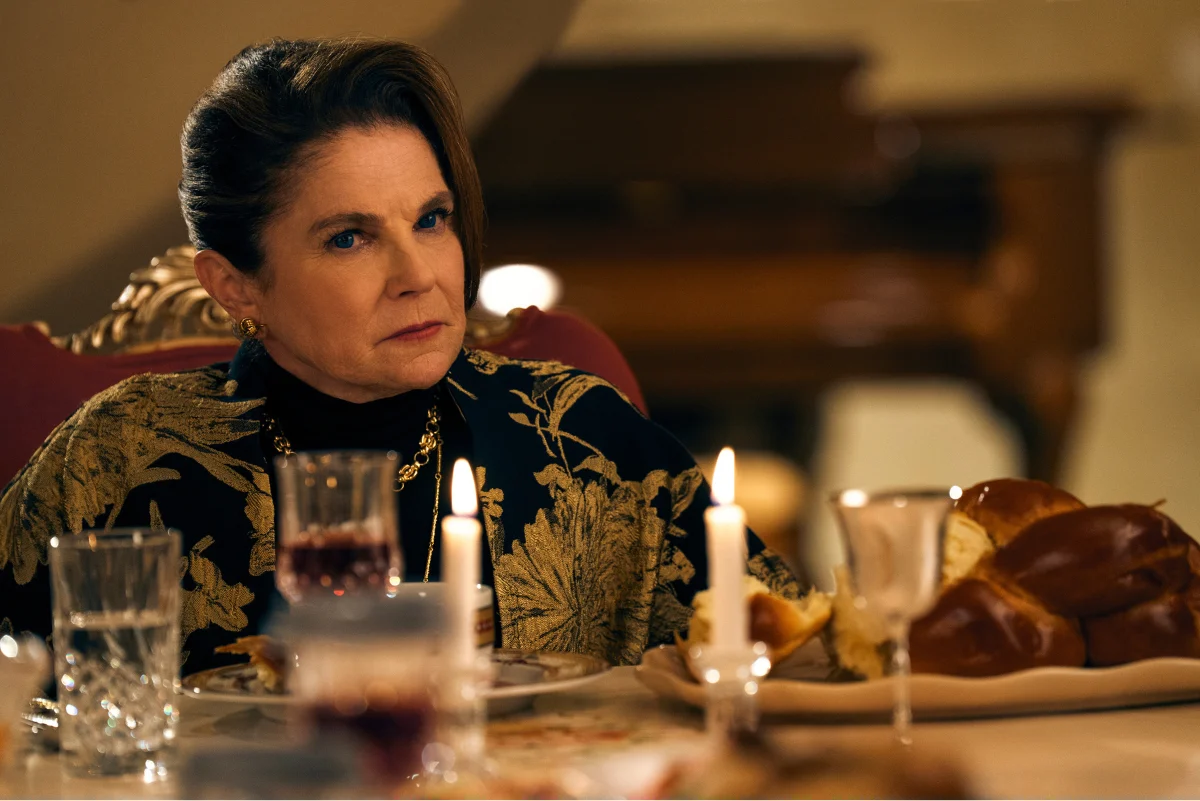
While many viewers tune in to season three of Netflix’s hit romantic comedy series “Nobody Wants This” for the undeniable chemistry of its central couple, Rabbi Noah Roklov and Joanne, a growing segment of the audience is showing up for an entirely different reason: Noah’s mother, Bina.
Portrayed by veteran stage and screen actress Tovah Feldshuh, Bina Roklov has evolved from a traditional overbearing television trope into a gloriously unapologetic, scene-stealing force of nature. With her razor-sharp one-liners, unmistakable disapproving glares, and a larger-than-life personality that commands every room she enters, Bina anchors the familial friction of the series with decades of seasoned comedic and dramatic timing.
Feldshuh’s performance builds on a legendary career that spans decades across theater, film, and television. Having famously originated the role of Yentl on Broadway in 1975—nearly a decade before Barbra Streisand brought the character to the cinematic screen—Feldshuh brings a rich theatrical pedigree to the Netflix series. Her extensive resume includes critically acclaimed portrayals such as Golda Meir in “Golda’s Balcony,” as well as memorable turns as distinct Jewish mothers in independent cinema and television, including “Kissing Jessica Stein” and “Crazy Ex-Girlfriend.”
In “Nobody Wants This,” Bina is introduced as a Soviet Jewish immigrant with a commanding presence and a thick Russian accent. Married to Ilan, played by Paul Ben-Victor, and mother to Noah, played by Adam Brody, and Sasha, played by Timothy Simons, Bina operates as the emotional and cultural anchor of the Roklov family. While the series leaves much of Bina’s early immigration history unsaid, Feldshuh infuses the character with the visible weight of generational Jewish experiences and deeply rooted family traditions.

Throughout the first three seasons, Bina has delivered some of the most memorable moments in the series, balancing sharp comedic delivery with surprising emotional depth.
1. The Definitive First Impression: "A shiksa"
Some characters require an entire television episode to establish their core motivations and personality traits. Feldshuh managed to accomplish the feat with just two words in the pilot episode of the series.
When Joanne, portrayed by Kristen Bell, unexpectedly arrives at the synagogue as Rabbi Noah’s new non-Jewish love interest, the family is immediately thrown into a state of quiet panic. When Noah’s sister-in-law Esther, played by Jackie Tohn, asks who the unfamiliar woman is, Bina delivers her immediate, unfiltered assessment: "A shiksa."
The impact of the moment lies entirely in Feldshuh’s delivery. Without missing a beat, she manages to convey an entire psychological and emotional spectrum ranging from acute shock and immediate suspicion to profound maternal disapproval, setting the antagonistic tone for her relationship with Joanne from the very start.

2. The Secret Prosciutto Incident
The complex dynamic between Bina and Joanne reaches a pivotal comedic peak in the first season’s ninth episode, titled “My Girl Bina.” Joanne arrives at Bina’s home bearing a high-end charcuterie board that prominently features prosciutto, a dry-cured Italian ham. For Bina, who maintains a strict kosher household, the presence of pork in her home is nothing short of a culinary and religious catastrophe.
With dramatic flair, Bina declares the entire platter tainted and sentences it directly to the trash bin. However, the power dynamic shifts dramatically when Joanne later catches Bina secretly snacking on the very same forbidden meat she had publicly condemned.
The confrontation temporarily gives Joanne the upper hand over a woman who has made her disdain crystal clear. Yet, by the end of the episode, Bina reclaims her signature composure. Wearing a disarming smile, she looks at Joanne and admits that she likes her significantly more than she initially anticipated, before leaning in to deliver the ultimate caveat: she will never allow her to end up with her son.
3. The Unrivaled Basketball Entrance
Feldshuh’s comedic timing extends far beyond dialogue, often stealing scenes entirely through physical comedy and cinematic framing. In the second season, Bina delivers what is arguably the most iconic entrance of the entire run during a family basketball game.

When Bina arrives at Noah and Sasha’s charity basketball game for their team, the "Matzah Ballers," she does so with a cinematic flair that stops the event in its tracks. Wearing oversized dark sunglasses and a sharply popped collar, she walks onto the court with an unapologetic swagger set to Fergie’s track “London Bridge.”
The reactions of her adult sons—two grown men who visibly cower under the weight of their mother’s mere presence—elevate the sequence into a masterclass in character introduction. Bina does not need to utter a single word to assert complete dominance over the basketball court and the audience alike.
4. The Authority of the Hamotzi
Bina’s role as a traditional matriarch is perhaps best showcased during a Shabbat dinner sequence in the Roklov household during the second season. Dressed in a bold, immaculate outfit with every hair precisely in place, Bina takes total command of the traditional rituals.
She leads the Hamotzi blessing with soaring enthusiasm, her voice rising above the chatter of the crowded dining room in a sing-song cadence that echoes the atmosphere of a traditional Hebrew school. She is the first to offer wishes of a peaceful Shabbat, systematically tearing apart pieces of freshly baked challah to pass down the table.

In the same breath, she seamlessly directs Joanne to her designated seat and issues a strict reminder regarding the house rule prohibiting cellular devices at the dinner table. The sequence captures Bina in her element, embodying the archetype of the undisputed Jewish matriarch with a natural ease that reflects Feldshuh’s own upbringing in Scarsdale, New York, where Friday night Shabbat dinners were a cornerstone of family life.
5. The Rebbetzin Makeover
As the series progresses into its third season, the relationship between Bina and Joanne undergoes a surprising evolution. Facing concerns about how her public image might impact Noah’s career advancement within the religious community, Joanne recognizes that there is only one person capable of engineering a rehabilitation strategy: Bina.
Upon arriving at Bina’s stately home, viewers are granted a rare, vulnerable glimpse of the matriarch before she has fully donned her public armor. Wearing a simple champagne-colored satin blouse and applying her own makeup without her signature elaborate brooches, Bina appears momentarily unguarded.
When Joanne formally asks for her assistance in navigating the complexities of the religious community, Bina responds not with hostility, but with the focused intensity of a professional taking on a masterclass assignment. With a mischievous twinkle in her eye, she delivers the definitive line of the episode: "Let me make you into a rebbetzin."

6. The Hamster Guilt Trip
Even in moments of emotional manipulation, Feldshuh ensures that Bina remains endlessly entertaining. Standing near the family’s backyard basketball court in the eighth episode of season three, Bina reflects nostalgically on Noah’s childhood hamster—an animal that, true to family form, possessed a traditional Hebrew name.
Bina recounts how the hamster accompanied young Noah everywhere, and how, upon its eventual passing, she thoughtfully buried it near the court so it could forever watch Noah play. The anecdote begins as a remarkably tender maternal memory, designed specifically to tug at Noah’s heartstrings and secure his alignment in an ongoing family dispute.
It is a testament to Feldshuh’s performance that even when Bina is weaponizing the memory of a childhood rodent to guilt-trip her adult son, the audience cannot help but admire her tactical brilliance.
As “Nobody Wants This” continues to captivate streaming audiences, the persistent demand for more screen time centered around Bina Roklov highlights the enduring appeal of well-crafted, unapologetic character acting. Whether answering long-standing questions about her immigration from the Soviet Union, her early life with Ilan, or the parenting strategies that shaped two vastly different sons, Feldshuh’s portrayal has firmly established Bina as an unforgettable cornerstone of contemporary television comedy.
