Unlocking the Classroom Dynamics: How Understanding Children’s "Love Languages" Can Transform the Homeschooling Experience
The late-night struggles of parenting and education often stem from a simple communication gap rather than a complex behavioral crisis. That was the realization experienced by homeschooling mother and author Jamie C. Martin, whose late-night anxieties over an unresolved issue with one of her children recently led to an unexpected breakthrough. After hours of reflection, prayer, and searching for answers, Martin reached out to a trusted friend and homeschooling mentor for guidance.

Describing the dilemma in just a sentence or two, Martin asked for advice. The mentor’s response was equally concise, posing a single question that reframed the entire situation: "What’s your child’s love language?"
While the concept of the five love languages is widely recognized in the context of adult relationships and marriage, Martin realized she had rarely considered how it applied directly to her children. Intrigued by the suggestion, she began researching her child’s specific love language and implemented targeted changes in how she showed affection and attention. The result, according to Martin, was swift and remarkable: the persistent issue largely vanished.

The framework of the five love languages was originally articulated years ago by relationship experts Gary Chapman and Ross Campbell. In their foundational work, they posited that every individual—child and adult alike—expresses and receives love best through one of five distinct communication styles. While parents naturally strive to express unconditional love across all avenues, understanding that each child possesses a unique emotional preference can significantly improve the relational health of a household, particularly within a homeschooling environment where families spend the vast majority of their time together.
What Is a Love Language and How Can It Be Determined?
Just as children exhibit vastly different personality traits, learning speeds, and temperaments, they also process emotional security through distinct channels. Recognizing these differences can prevent misunderstandings where parents feel they are giving constant affection, while children feel emotionally unfulfilled.

To help identify these preferences, tools such as online preference quizzes—frequently recommended for children ages nine and older—can provide valuable insights. Martin noted that her own children, Trishna, Jonathan, and Elijah, participated in the assessment process, which helped clarify how each individual uniquely processes emotional support.
An overview of the five love languages reveals distinct ways these principles manifest in daily family and educational routines.

Physical Touch
For children whose primary love language is physical touch, affection is communicated most clearly through tangible, bodily reassurance. These children desperately need hugs, kisses, and supportive pats on the shoulder. Without regular physical affirmation, they may misinterpret neutral situations, believing they have done something wrong or that their parents are displeased with them. In a learning environment, integrating physical reassurance can help ground an anxious student and provide the emotional security needed to tackle challenging academic tasks.
Words of Affirmation
In modern culture, the art of offering deliberate affirmation is frequently overlooked. However, supportive and well-chosen words do not damage children; rather, they fill them with confidence and resilience. Spoken encouragement powerfully communicates love, carrying exceptional weight for children or adults whose primary love language relies on verbal validation. Integrating words of affirmation into the school day can transform a frustrating lesson into an opportunity for growth, anchoring the student in a secure, supportive environment.

Receiving Gifts
The concept of receiving gifts is often misconstrued as materialism or excessive spending. However, exploring the framework more deeply reveals that gifts can be redefined around thoughtfulness and intentionality rather than financial cost. Reframing essential items—such as seasonal clothing or school supplies—into special presentations can alter how a child perceives the gesture. For instance, transforming practical purchases into small surprises left in a designated space can communicate care and consideration without requiring frequent trips to the store or large financial outlays.
Quality Time
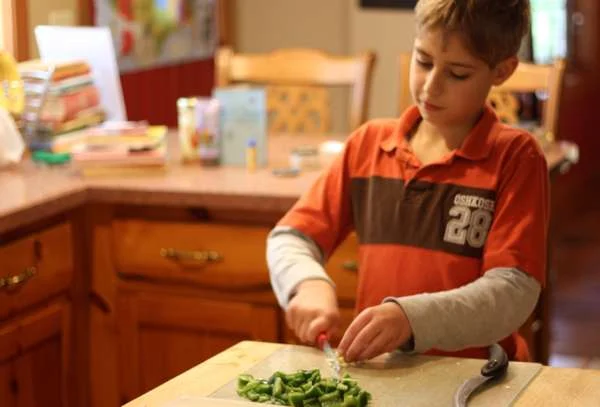
Quality time presents a unique challenge for homeschooling families, who often mistakenly assume that physical proximity equates to emotional connection. As a homeschooling mother, Martin observed that simply being in the same room all day does not automatically fulfill the emotional needs of children whose primary language is quality time. If a parent is distracted, stressed, or focused entirely on administrative tasks, it fails to register in the child’s emotional bank account. Meaningful quality time does not require elaborate outings or specialized events; everyday activities, such as preparing a meal together while chatting, can effectively fill a child’s relational tank.

Acts of Service
Acts of service are frequently misunderstood as enabling or doing everything for a child while removing personal responsibility. Instead, this love language centers on recognizing that through helpful actions, a child feels deeply valued and loved. When parents identify acts of service as a child’s main preference, they can channel extra effort into assisting them with the specific duties or subjects they struggle with the most, transforming a chore or a difficult academic hurdle into a shared act of care.
Strengthening Family Connections Through Intentional Communication
Exploring the dynamics of children’s emotional needs highlights one of the unique advantages of homeschooling: the extended hours spent together each day provide ample opportunity to understand children deeply. This extended time allows parents to demonstrate unconditional love in ways that resonate most profoundly with each individual child.

Furthermore, practicing intentional communication yields an unexpected long-term benefit. By demonstrating love in ways children can distinctly recognize, parents model healthy relational behaviors, teaching the next generation how to offer care and empathy in return. As author Isabel Allende once observed, children are best accepted with gratitude and appreciation for who they are, much like trees that are loved in their natural state rather than forced to change.
By bridging the gap between parental effort and a child’s emotional reception, families can cultivate an environment where education and emotional well-being go hand in hand, turning daily challenges into opportunities for lasting connection.
