Netflix’s ‘Nobody Wants This’ Season 3 Embraces Self-Awareness and Simplicity in Its Portrayal of Judaism
Editorial note: Spoilers ahead for season three of “Nobody Wants This.”
In season three, episode two of Netflix’s virally popular romantic comedy series “Nobody Wants This,” dating podcaster Joanne, played by Kristen Bell, explains to her Intro to Judaism class what initially drew her to the faith. Sharing her perspective with the group as the rabbi’s girlfriend, she expresses her appreciation for the tradition, noting that she loves the rituals, the openness, the close-knit community, and the cozy vibes. The remark is immediately met with a sharp, deadpan quip from her conversion class nemesis, Sebastien, played by Andrew Rannells, who asks if that particular concept is written in the Torah.
This brief, witty exchange concisely encapsulates the broader tenor and evolution of the show’s third season, which premiered on Netflix. It serves as the key to why the 10 episodes succeed while simultaneously acknowledging a fundamental truth about the protagonist and the series itself: “Nobody Wants This” has finally become self-aware.
As much as Judaism has remained at the center of the narrative throughout the run of “Nobody Wants This,” portraying it authentically has historically not been the show’s greatest strength. Cultural critics such as Esther Zuckerman and Jessica Grose concluded after the release of the first season that the romantic comedy relied heavily on outdated and flattened stereotypes of Jewish women. The show’s creator, Erin Foster, even candidly admitted in an interview with Hey Alma that she was not thinking too deeply about the program’s depiction of Jewish women during its conceptualization.
Unfortunately, the second season proved even more problematic, lacking the necessary writing depth, character development, and narrative novelty to bolster its premise. It concocted a version of Judaism that was treated less as a rich, ancient religion to be explored with genuine curiosity and care, and more as an inconvenient obstacle to be maneuvered around, generalized, and laughed at. After an entire season of Joanne waffling over whether or not to convert with the indecisiveness of a trendy-brand literary figure, she ultimately reaches her decision after her sister-in-law, Esther, played by Jackie Tohn, tells Joanne she already feels Jewish. According to Esther, this feeling stems from a handful of exceedingly non-specific qualities, chief among them being warm and cozy.
That foundation provided a remarkably amorphous rationale upon which to base a life-altering decision to convert to a new religion, a critique echoed by Vulture critic Fran Hoepfner. Writing for The Hollywood Reporter, Steven Zeitchik similarly described the approach as Judaism treated like a hood ornament, consisting of superficial elements dropped in to make the audience feel like something substantive is being explored, while the show itself maintains zero interest in doing the actual heavy lifting.
Fast-forwarding to Sebastien’s snarky dismissal of Joanne’s reasoning in season three, it becomes apparent that the moment operates as a knowing wink from creator Erin Foster alongside showrunners Jenni Konner and Bruce Eric Kaplan. The message from the production team was clear, and the critique had been received.
The resulting creative shift led to a season that leans directly into what “Nobody Wants This” actually does best. The most compelling conflicts the show has ever developed do not stem from the fundamental cultural differences between Joanne and her agnostic family and the Roklov family’s traditional Jewish lifestyle. Instead, the narrative sparks fly because Noah’s family presents a prim, highly unified front aspiring toward upper-class social conventions, while the Williams family represents low-brow, free-spirited, chaotic alternative energy. Viewers consistently return to the series because Noah is portrayed as both conventionally attractive and emotionally mature, and because the dynamic features a juicy, ongoing love triangle involving Sasha, played by Timothy Simons, Esther, and Morgan, played by Justine Lupe.
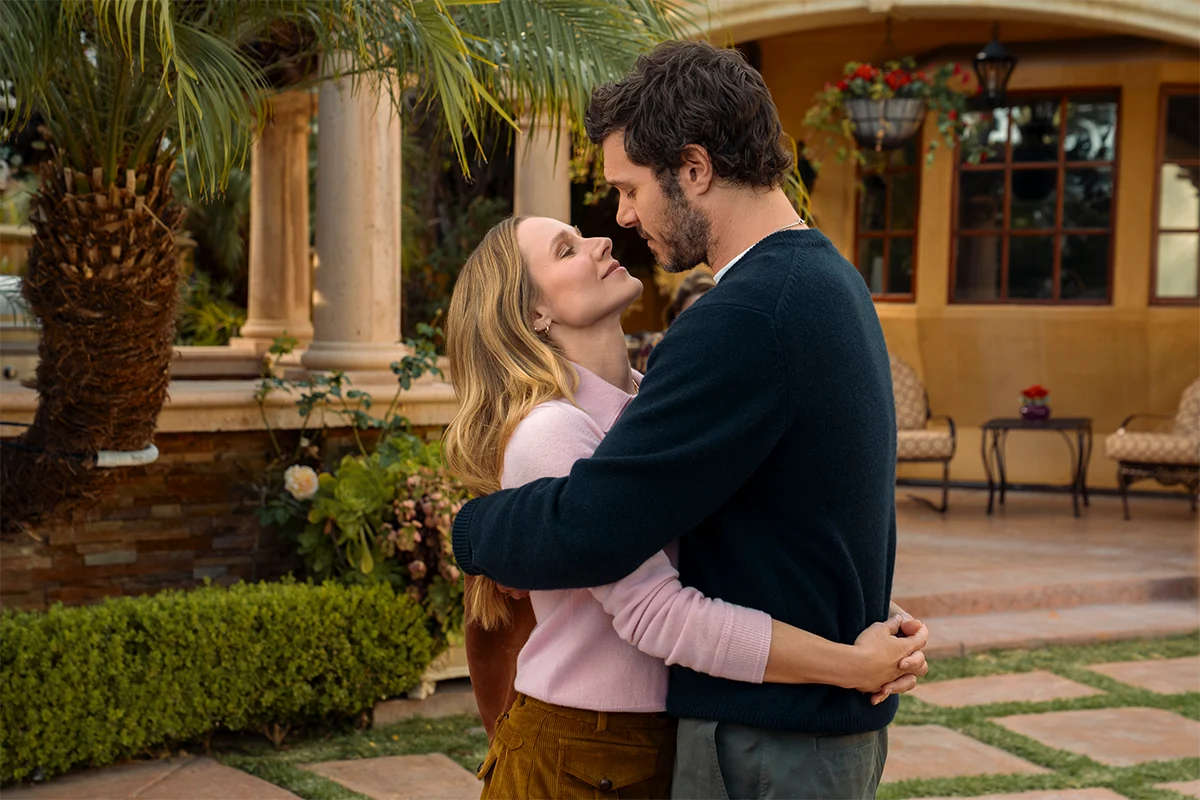
Season three delivers precisely on these comedic and dramatic fronts. Joanne firmly commits to the long-term future of the relationship by officially beginning conversion classes, and Noah responds in kind by proposing marriage. This milestone forces the Roklov and Williams families even closer together, generating substantial comedic friction. The current “Nobody Wants This” universe features Bina heavily inserting herself into Joanne’s wedding planning, going so far as to insist that Noah and Joanne exchange vows on the backyard basketball court so Eliezer—Noah’s childhood pet hamster, who is naturally buried beneath it—can bear witness to the ceremony.
At the same time, the relationship between Morgan and Sasha deepens significantly. This development unfolds first when a newly single Sasha moves into Lynn’s spare bedroom, and later when the two characters share an unexpected hookup during a business trip to New York City. Timothy Simons and Justine Lupe prove to be winning comedy partners, and stepping slightly outside the intense family dynamics provides them with ample room for comedic exploration.
By contrast, Joanne’s conversion classes are deliberately relegated to a handful of brief, punchy scenes. Rabbi Eden, played by Sarah Silverman, delivers short bursts of Jewish wisdom while Sebastien and Joanne engage in brief verbal sparring before the scene cuts away. By the eighth episode, Rabbi Eden is already wrapping up the Intro to Judaism curriculum, leaving viewers with little sense of how much narrative time has actually passed or how Joanne has actively grappled with the profound implications of living a Jewish life. Rabbi Eden mentions that each student will eventually meet with a beit din, a rabbinical court, but the audience never witnesses that pivotal conversation for Joanne, nor is the beit din ever mentioned again.
Presumably, the meeting goes well, because by episode 10, aptly titled “The Plunge,” Joanne completes her ritual immersion in the mikveh located in the Pacific Ocean. Voilá, the blonde podcaster once disparaged as an outsider has officially become Jewish.
In an alternate version of the television series, a deeper exploration tracking the rigorous intellectual and spiritual demands of converting to Judaism could have offered rich narrative territory. Scenes depicting Joanne preparing for, engaging in deep conversation with, and perhaps being constructively challenged by her beit din could have established genuine interiority and depth in her connection to Judaism. Perhaps concepts such as the Shechinah, representing the Divine Feminine, might have deeply resonated with this particular version of Joanne, or perhaps Judaism’s historic connection to the natural world and lunar cycles could have served as an appealing entry point. At the very least, a character like Joanne might have naturally latched onto the core Jewish value of tikkun olam, repairing the world.
However, “Nobody Wants This” is explicitly uninterested in deepening Joanne’s relationship to Judaism outside of the immediate context of her relationship with Noah. Recognizing this reality allows for a smoother viewing experience. Looking back at how the show has portrayed Judaism in previous installments, attempting a sweeping theological exploration likely would not have yielded successful results. For many viewers, less is more when it comes to the intersection of Jewish identity and mainstream romantic comedies. Holding back on forced religious depth that the production is simply not equipped to support proves to be a wise and disciplined creative choice by showrunners Konner and Kaplan.
The moments of Judaism that do make it onto the screen in season three remain enjoyable to behold precisely because of their straightforward simplicity. In the third episode, Noah and Joanne host a hanukkat habayit, a traditional Jewish home dedication ritual. As family, friends, and even Joanne’s ex-partner gather, the couple affixes a mezuzah to the final unadorned doorpost in their home, marking the official beginning of building a shared Jewish life together.
The promise established during the hanukkat habayit finds its ultimate fulfillment in the season finale mikveh scene. As Joanne stands on the beach alongside Noah and Rabbi Eden in the closing moments of the episode, she articulates her conversion in direct relation to Noah and their anticipated future family. She explains that she wants their future children to understand they belong to something much larger than themselves or even their immediate family, and that when they inevitably feel lost, they will possess these ancient traditions to guide them. She then walks into the surf, removes her outer garments, dunks herself under the water three times, and recites the traditional blessings.
In both instances, the prayers are executed accurately, with notable credit due to Kristen Bell for her Hebrew pronunciation, the rituals are performed with clear intention, the values remain consistent, and the entire sequence feels entirely authentic to the established characters of Noah and Joanne. The emotional peak arrives when Joanne steps back onto the sand and Noah, visibly moved by the proceedings, asks her if she wants to get married right then and there. As the camera pans upward, zooming away from the couple exchanging rings on the sand, it becomes clear that “Nobody Wants This” has finally found its footing and is moving in the right direction.
