Navigating Social Media Around Elections: A Call for Faith, Empathy, and American Inclusion
Spending time on social media platforms around the volatile ecosystem of an election cycle is inherently fraught with tension. Whether scrolling through feeds days before voters head to the ballot boxes or wading through the digital aftermath as results are tallied, the experience can frequently feel like walking through a minefield. It is an environment where algorithms are
optimized for outrage and polarization, yet every once in a while, a post appears on a timeline that cuts through the noise entirely, stopping a user dead in their tracks and forcing a moment of profound reflection.
This was the exact reality for one social media user in the days following a recent midterm election. Scrolling through Facebook, the user encountered a post shared by an old acquaintance from decades past—someone with whom they had shared childhood pews in their hometown church. The shared content featured a striking visual grid composed of four distinct maps of the United States.
The political and cultural commentary embedded in the graphic was unmistakable. The first map was colored entirely in solid red. The second map was rendered entirely in solid blue. The third map featured a vibrant American flag stretching from coast to coast. The fourth and final map was cloaked entirely in solid black, designed to mimic the stark and terrifying aesthetic associated with the Islamic State.
Accompanying the four-panel image was a bold, divisive caption that laid bare the underlying intent of the post. "Some want this. Others want this. I want this," the caption read, pointing directly toward the patriotic American flag map. It then added a harsh condemnation: "Not this!" referring directly to the map cloaked in black. For the user viewing the post, the implication was clear: it served as a not-so-subtle reaction and warning regarding the electoral victory of Abdul El-Sayed, who achieved a historic milestone as a Muslim candidate winning a prominent legislative seat.
For the person reading the post, the encounter carried a deeper, more personal weight. The man who shared the inflammatory graphic and the user scrolling past it shared a foundational bond rooted in the Christian faith. This shared religious background immediately brought to mind one of the most enduring and radical teachings of Jesus—the parable of the Good Samaritan.
In the biblical narrative, when Jesus is explicitly asked the foundational question, "Who is my neighbor?", he bypasses religious elites and traditional expectations to choose a Samaritan as the ultimate hero of the story. In the historical and cultural context of Jesus’ time, Samaritans belonged to a religious community marked by deep-seated historical divisions, theological disputes, and intense animosity with the Jewish community. By lifting up a Samaritan as a moral exemplar, the teaching challenges listeners to radically redefine who they consider their neighbor, urging them to cross dangerous social and cultural divides.
Reflecting on this foundational text, the user recognized a timeless mandate that resonates just as powerfully in the modern political climate: humanity is called to love our neighbors across religious, cultural, and political differences, but this calling is never more vital—or more difficult—than when those differences actively challenge our comfort zones and worldview.
We are called to love our neighbors across religious, cultural, and political differences — but especially when those differences challenge us.
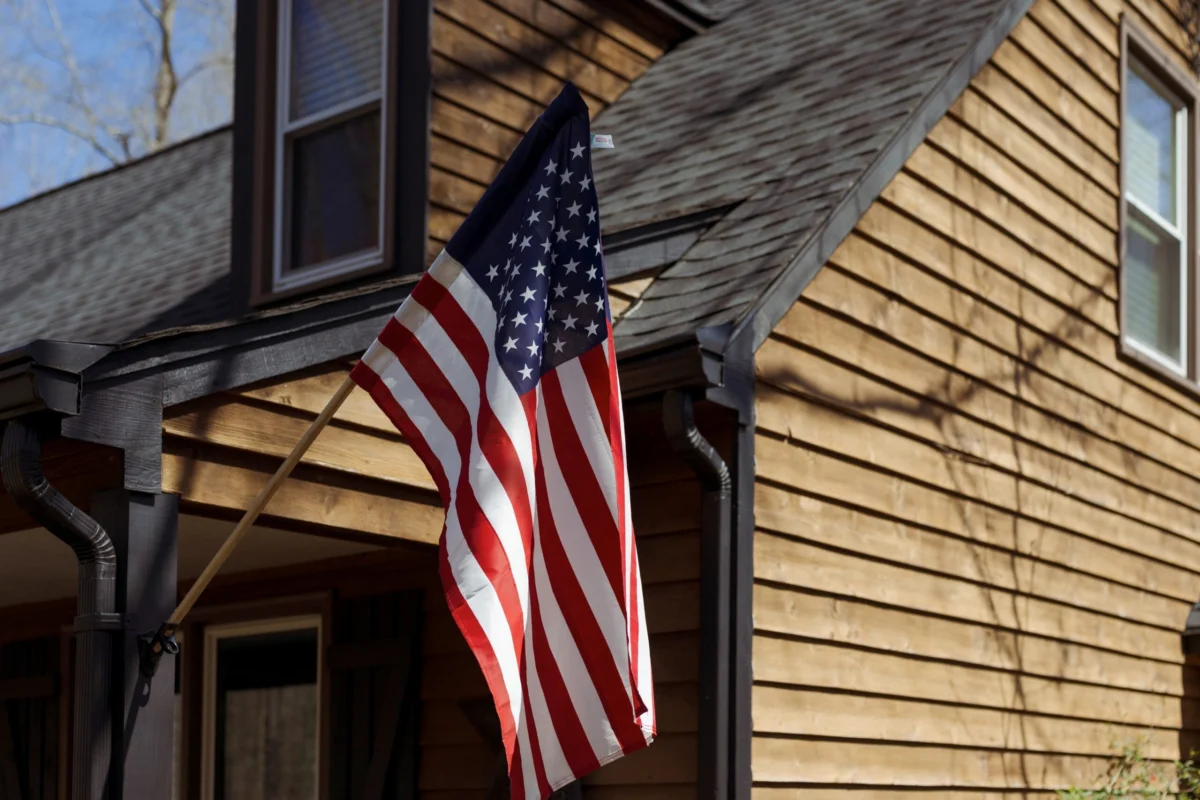
At the heart of this reflection lies a crucial distinction that often gets lost in the heated rhetoric of modern political debates. It is essential to carefully distinguish religious extremism from the everyday reality of Muslim neighbors, who are every bit as American as Christians, Jews, Hindus, atheists, agnostics, and individuals from every other walk of life. To the user who paused on that Facebook post, the patriotic American flag displayed in the middle of the graphic should be big enough, broad enough, and inclusive enough to authentically represent every single person living beneath it, regardless of their background.
Choosing how to respond to divisive rhetoric online is a frequent dilemma for internet users. Many people choose the path of least resistance, scrolling past offensive or exclusionary posts to avoid confrontation or the deterioration of digital relationships. The user who encountered the map graphic is not someone who typically wades into hot-button political issues or ideological battlegrounds on social media platforms.
However, looking at the post shared by a figure from their formative religious years, a decision was made to break that silence. Choosing to respond, the user operated in the spirit of "calling in" rather than "calling out." Drawing directly upon the shared Christian faith that connected them, the user formulated a response explaining why they interpreted the four-map image through a fundamentally different lens.
The objective of the response was not to win a petty argument on a public forum or to publicly shame an old acquaintance. Instead, the goal was to offer an alternative perspective—a different way of viewing Muslim neighbors within the fabric of society, and a broader way of thinking about what it truly means to be an American citizen in a pluralistic republic.
This philosophy of engagement extends directly into how the user evaluates the broader results of the recent election cycle. In a healthy democracy, it is entirely possible to disagree profoundly with a candidate’s political platform, legislative agenda, or ideological alignment while still celebrating the historic nature of a representative government. The recent election cycle yielded one of the most diverse groups of leaders in the history of the nation, spanning across traditional party lines and challenging homogenous expectations of political power.
For instance, the political landscape saw landmark moments, such as conservative leaders achieving historic representation, alongside figures like El-Sayed securing groundbreaking victories in states like Michigan. An observer does not need to agree with every policy proposal or political stance put forward by these diverse leaders to recognize the profound hope embedded in such milestones. These victories represent a shifting landscape where civic participation is expanding to include voices that have historically been marginalized or excluded from the halls of power.
Ultimately, this perspective points toward a hopeful vision for the future of the United States. The core aspiration is not that three hundred million citizens will suddenly achieve total uniformity in thought, belief, or political ideology. Total agreement is neither realistic nor desirable in a free society.
Instead, the true goal is that Americans can learn to live together peaceably, love their neighbors genuinely, and recognize that people of diverse faiths, those with no faith at all, individuals of every racial background, and citizens holding vastly different political beliefs are all indispensable authors of the ongoing American story.
The patriotic flag, much like the constitutional framework of the nation itself, remains big enough to cover us all.
