Raising the Next Generation of Citizens: Why Faith Communities and Parents Must Model Civic Grace During Election Season
As the mother of three children ages 14, 12, and 10, the daily rhythm of life is defined by a familiar and relentless routine of logistical management. Between keeping track of who needs their violin for school, searching for a misplaced lunchbox, or wondering how the household has managed to run out of groceries yet again, my mind is constantly occupied by the immediate needs of my family. Yet, somewhere between the endless cycle of school pickups, evening gymnastics practices, and folding towering piles of laundry, my thoughts inevitably drift toward a much larger, weightier question: What kind of future are we actively creating for our children, and what sort of country will they ultimately inherit?
Like most parents navigating the complexities of modern life, I want my kids to grow up in an America where differences are not viewed as existential threats, but rather as valuable opportunities to learn from one another. I want them to witness living examples of mutual respect, peaceful engagement, and active civic responsibility. With midterm elections now just weeks away, the present moment offers a critical window to model those essential values directly within our own homes, dinner tables, and local neighborhoods.
Election seasons have historically brought out the best in American democracy. There is a palpable sense of shared purpose when we proudly wear our bright red, white, and blue "I Voted" stickers, serving as a reminder that ordinary citizens possess a direct voice in shaping the trajectory of our communities and our nation. At the same time, however, election cycles can starkly expose real and present risks. Contemporary political seasons are frequently complicated by widespread disinformation campaigns, deep and enduring societal divisions, a measurable decline in public trust in democratic institutions, and the looming, persistent threat of political violence.
These complex challenges extend far beyond the outcome of any single election. They serve as a stress test for the democratic norms and the foundational civic trust that have successfully sustained the United nation for generations. At times, it can certainly feel as though our political differences are widening into unbridgeable chasms while our collective ability to converse across those divides is rapidly shrinking. Too often, contemporary American culture encourages citizens to view one another with deep suspicion rather than assuming the best intentions of our fellow community members.
In truth, however, a functioning democracy has never depended on uniform agreement. In fact, disagreement is inherently baked into the American experiment. What truly matters is our ongoing willingness to engage constructively despite our deep-seated differences.
In moments of societal uncertainty and polarization, faith communities are uniquely positioned to model what that constructive engagement looks like in practice. Religious and spiritual organizations have the capacity to demonstrate that political disagreement is fundamentally distinct from personal disrespect. They can show that people holding vastly different theological and political beliefs can still work collaboratively toward common goals, and that enduring human values like dignity, humility, and compassion far transcend temporary political labels and partisan affiliations.
That vital mission sits directly at the heart of the ongoing work at Interfaith America. The organization is dedicated to activating leaders across the country to respect, relate, and cooperate across deep-seated differences for the sake of the common good. At a time when partisan division frequently dominates our daily news headlines and social media feeds, Interfaith America helps everyday people develop the practical skills and interpersonal relationships necessary to strengthen our shared civic life.
For members of various faith communities seeking guidance during this tense period, resources are readily available. The Interfaith America "Faith in Elections Playbook," for instance, offers practical guidance tailored specifically for faith leaders, local congregations, and individual community members who are actively seeking to support peaceful and constructive civic engagement. The playbook includes concrete tools designed to encourage respectful dialogue, effectively respond to pervasive misinformation, and help local communities navigate high-stakes election seasons with integrity, patience, and care.
The urgent need for this type of intentional work has arguably never been greater in modern history. Democracy is not a self-sustaining entity that runs on autopilot; rather, it relies entirely upon citizens who are genuinely willing to invest time in relationships, uphold essential democratic norms, and consistently resist the easy temptation to demonize those with whom they disagree. Faith communities occupy a uniquely trusted position to model these vital habits for the broader public.
As part of these ongoing efforts, community members are invited to participate in the upcoming "Praying for America" gathering scheduled for November 1, hosted in partnership with organizations like Braver Angels. This event will bring together people from a wide multitude of faith traditions in a shared spirit of humility, hope, and collective concern for the future of the nation.
The Goal Is a Commitment to the Common Good and Human Dignity
The ultimate objective of these initiatives is not to manufacture superficial political agreement among citizens. It is something much deeper and more enduring: a steadfast commitment to the common good, the peaceful participation in our democratic processes, and the deliberate practice of treating one another with inherent dignity during a deeply consequential election season.
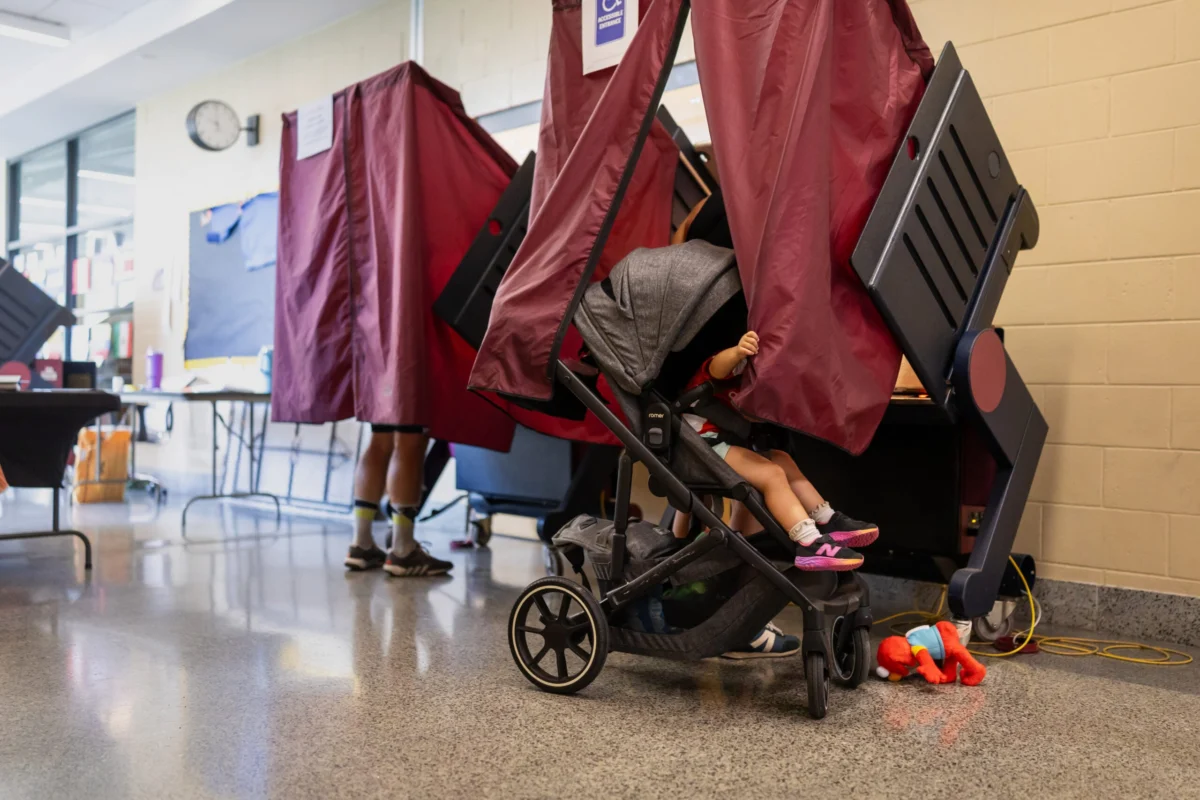
As Election Day draws closer, I sincerely hope my children observe far more than the incessant stream of campaign texts constantly lighting up my mobile phone screen. When I take them with me to the local polling place, I hope they witness neighbors treating one another with genuine civility and respect. I hope they see everyday people standing together across ideological lines in support of a healthier, more resilient civic culture.
Our children are constantly watching how we navigate the complexities of public life. Let us ensure we give them an example truly worth following.
