The Myth of ‘The Best’: How Homeschooling Parents Are Reevaluating Perfection in Favor of Personal Reality
For many parents who have chosen the path of alternative education, a familiar phantom quietly occupies their thoughts: the idealized homeschooling mother. In the imagination, this archetype accomplishes every educational objective with effortless precision. Her children progress in a straight, forward-moving line, completely unhindered by external circumstances, emotional turbulence, or the unpredictable moods native to growing children. She is organized, unfazed, and perpetually equipped for whatever the curriculum demands.
For veteran educator and author Jamie C. Martin, founder of Simple Homeschool, this idealized figure is simultaneously a personal hero and a persistent source of frustration. Most parents find that reality rarely matches the pristine standards of the imaginary archetype. Every once in a while, conditions align, inspiration flows, and a household operates with seamless rhythm for a day or two. Yet, real life inevitably interrupts with the reminder that imperfection and human limitation are permanent fixtures of the domestic landscape.

When life brings heavier burdens, parents frequently discover that they are no longer delivering an idealized version of education to their children. Instead, they are offering something far more authentic, even if it feels inadequate by comparison: their personal best.
This tension between the impossible standard of absolute perfection and the grounded reality of human effort forms a central challenge for families navigating alternative education. Rather than focusing on delivering a complete or flawless education—neither of which is entirely necessary or realistically attainable—advocates suggest that the true mark of success lies in awakening a genuine, lifelong love of learning within the child.
Navigating Meadows and Rock Walls
To better understand the shifting capacities of parents throughout different seasons of life, educators often point to visual metaphors that capture the daily reality of child-rearing and instruction. Lisa Grace Byrne, a writer and educator, previously described these distinct life phases by comparing them to two very different terrains.

In some seasons, a family’s journey resembles a walk across a flat, grassy field. Progress is steady and measurable, covering significant ground one natural step at a time. In these open meadows, routines flow smoothly, lessons are absorbed with ease, and the educational path appears clear and straightforward.
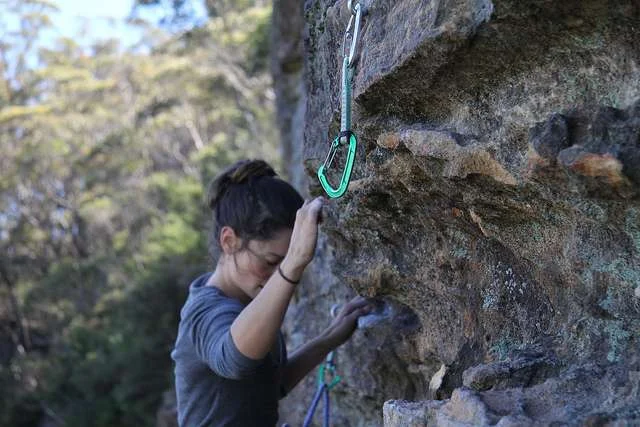
However, other seasons bring families to the edge of the field, where a steep, rocky wall towers abruptly before them. Turning back is neither practical nor desirable, and the only viable option for continued progress is climbing—one slow, deliberate, and sometimes shaky grip at a foothold after another. While this journey still counts as forward momentum, it looks entirely different from the effortless pace of the grassy field.
The standard of excellence that a parent can offer during a peaceful meadow season varies drastically from the capacity they bring when they are actively scaling a vertical wall. Many families experience these demanding climbing seasons due to unexpected life changes, and the weight of responsibility can feel isolating for those attempting to manage it alone.

Defining the Personal Best Under Pressure
A parent’s personal best is not a static benchmark; it shifts from day to day and hour to hour, shaped heavily by immediate circumstances. The capacity to instruct and nurture looks entirely different for an individual managing a chronic health condition, welcoming a newborn, or adjusting to the steep learning curve of a newly established homeschooling routine. Similar adjustments are required when families care for children with special needs, support teenagers through emotional transitions, or grieve the loss of a loved one.
While educators agree that difficult circumstances should not serve as an excuse to abandon educational responsibilities, parents must inevitably play the cards they have been dealt. When caregivers recognize that what they are offering is genuinely the limit of their current capacity—however inadequate it might appear against external benchmarks—the alternative involves extending grace to oneself rather than succumbing to perpetual burnout.
Throughout demanding seasons, many experienced educators find solace by returning to foundational literature on parenting and alternative education. Revisiting passages that resonated deeply in the past helps replace self-doubt with reassuring principles. Furthermore, conscientious parents across all educational models—whether public, private, or home-based—frequently wrestle with underlying insecurities regarding their children’s futures. Documenting and comparing these anxieties reveals that doubts tend to persist regardless of the chosen schooling method, even if the specific worries vary.

Recognizing Unseen Contributions and Natural Strengths
Examining what a parent’s limited personal best has already achieved often uncovers significant benefits that might otherwise go unnoticed. Children frequently experience profound improvements in their overall well-being simply by stepping away from environments that caused severe stress, such as chronic bullying or overstimulating traditional classrooms.
Beyond these protective measures, a parent’s personal best incorporates ingrained natural strengths—attributes so familiar to the individual that they are often dismissed as ordinary. Traits that seem completely normal to one person can inject a distinct and positive personality into a household environment. Educational writers often emphasize that recognizing and building a routine around these innate strengths allows families to thrive authentically, even if they never construct elaborate school projects or follow rigid instructional templates.
Ultimately, the most valuable support a parent can receive during challenging educational phases is not a flawless blueprint from an unreachable expert, but rather the companionship of someone willing to acknowledge the genuine difficulty of the journey. By embracing an authentic, human approach to education, parents may find that their imperfect efforts, when offered sincerely, meet the true needs of their children just as effectively as any idealized standard of perfection.
