Beyond Reaction: How American Mosques Can Lead, Protect, and Connect Amid Rising Islamophobia
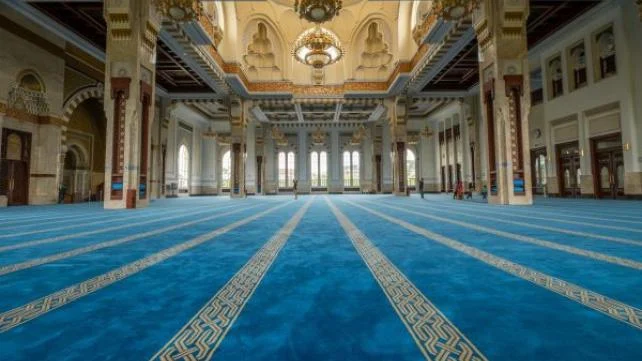
Islamophobia is rising across the United States. For millions of American Muslims, this sobering reality is not news, but rather a persistent backdrop to daily life, civic engagement, and community building. In an increasingly polarized climate where politicians, institutional actors, and bad-faith influencers weaponize bigotry for political gain, Islamic centers and mosques find themselves at a critical crossroads. They must navigate a difficult environment that demands both vigilant community protection and proactive, principled leadership.
The pressure points facing American Muslims are intensifying across multiple fronts—educational, political, and judicial. In Texas, the State Board of Education has approved curriculum updates that falsely characterize the Prophet Muhammad, upon whom be peace and blessings, as "brutal." This institutional normalization of bias in the classroom directly impacts Muslim children, who sit in public school desks listening to state-sanctioned distortions of their faith’s most revered figures.
Compounding this educational hostile environment, national political rhetoric has sank to new lows. The President of the United States has turned the sacred name Muhammad—a name borne by millions of Muslim boys and men worldwide out of love and reverence for the final Prophet—into a punchline at political rallies. This rhetorical degradation does not happen in a vacuum; it fits squarely into a broader, coordinated campaign designed to frame Muslims as perpetual foreigners who are fundamentally incompatible with American society.
The systemic targeting of American Muslims extends far beyond rhetoric and curriculum changes into the machinery of government. Federal agents recently executed a raid on the home of Representative Ilhan Omar, one of the most prominent Muslim women serving in American public office, in what recent news reports describe as an aggressive, unprecedented effort aimed at stripping her of her citizenship and ultimately expelling her from the country. This chilling escalation against an elected official signals to many in the Muslim community that institutional protections are under severe strain.
Simultaneously, state legislatures are actively advancing anti-Muslim and xenophobic policies under the guise of legal reform. In Florida, a law enacted earlier this year bars state courts from utilizing what is vaguely termed "foreign or religious law," specifically naming Sharia in a transparently discriminatory legislative maneuver. Similarly, Texas Governor Greg Abbott vowed to fully ban Sharia law, while the state’s Attorney General launched formal investigations into a Dallas-based Islamic mediation group. On the federal level, a congressional bloc styling itself the "Sharia-Free America Caucus" has rapidly expanded its membership, boasting more than 60 lawmakers dedicated to advancing these exclusionary narratives.
When confronted with these escalating hostilities, communities often experience a sharp internal divide. Some congregants argue that the local masjid must issue sharp, combative denunciations to meet injustice head-on. Others, fearful of attracting unwanted attention or facing targeted harassment, advocate for keeping a low profile and staying safe behind closed doors. Yet, community advocates and leaders argue that a masjid can and must do better than falling into this false binary. Instead of reacting out of fear or perpetual anger, Islamic centers have the opportunity to lead with calm resilience, actively connect with their geographical neighbors, and open their physical and spiritual doors to the broader public.
Thinking points for masjid leaders
For board members, trustees, and directors steering Islamic institutions through this turbulent political season, understanding the macro-level architecture of modern Islamophobia is essential. The trivialization of sacred names and the legislative obsession with nonexistent threats like Sharia law are not isolated incidents. They are calculated components of a wider cultural strategy that paints Muslims as an external threat. Recognizing this pattern allows leadership to shift away from a perpetual state of defensive panic and toward a strategic, long-term posture of community resilience and public education.
Leaders must also weigh the emotional and psychological toll these national events take on their congregants. When children hear their names or their foundational religious figures mocked by national political figures, parents look to the masjid for guidance, comfort, and stability. Masjid leadership must provide a steady anchor, ensuring that institutional responses prioritize both the physical security of the premises and the mental well-being of the congregation, particularly the youth who are navigating these hostile social dynamics in schools and public spaces.
Talking points for your imam and spokesperson
When imams and designated institutional spokespersons address the congregation or speak with external media outlets, the messaging requires careful calibration. Rather than taking the bait of bad-faith actors or descending into partisan rancor, religious leaders must ground their public statements in the universal values of dignity, truth, and community service.
Spokespersons should emphasize that mockery directed at sacred figures is an affront not only to Muslims, but to the broader principle of mutual respect that sustains a pluralistic society. At the same time, imams can pivot the conversation from grievance to grace, reminding congregants that prophetic tradition responds to hostility with steadfast character, patience, and unwavering commitment to doing good. This approach transforms a moment of targeted disrespect into an educational opportunity about who American Muslims truly are and what their institutions contribute to the social fabric.
What your masjid can do
Beyond issuing statements or hosting internal discussions, masjids are uniquely positioned to engage in proactive community diplomacy. Opening physical doors through structured neighborhood open houses, interfaith dinners, and civic outreach programs remains one of the most effective antidotes to xenophobia. When local residents, educators, journalists, and civic leaders walk into a mosque, share a meal, and converse directly with the people behind the names and the headlines, abstract stereotypes quickly dissolve into human connections.
Furthermore, masjids can collaborate closely with civil rights organizations, local interfaith coalitions, and legal advocacy groups to ensure their congregations are educated about their rights and equipped with proper safety protocols. Establishing robust lines of communication with local law enforcement, organizing security assessments, and creating support networks for families dealing with school-level bullying are practical, actionable steps that protect the community while maintaining an open, welcoming environment.
Sample statement for your masjid
To assist local communities in responding effectively to instances of public mockery and systemic hostility, institutions can draw upon unified messaging frameworks that reflect dignity and openness:
[Masjid name] is deeply saddened that the name Muhammad was made into a joke at a public rally. For nearly two billion people around the globe, it is the name of a deeply beloved Prophet, may God’s blessings and peace be upon him. Muslim parents in our town give this name to their sons with immense love, prayers, and hope for their futures. We do not answer mockery with anger or retaliation. We answer it by serving our neighbors with excellence and keeping our doors wide open. We warmly invite everyone in [city] to attend our upcoming open house on [date] at [time] to meet the real people behind the name. We also express our sincere gratitude to the local faith leaders, neighbors, and allies who have already reached out to us with messages of solidarity and support.
Related resources for further reading and community education include analysis on navigating political rhetoric, practical steps for responding when sacred names are mocked, and guidance for parents on talking with children about hate and bigotry.
