New Peer-Reviewed Study Validates Spinning Babies® Approach to Fetal Rotation
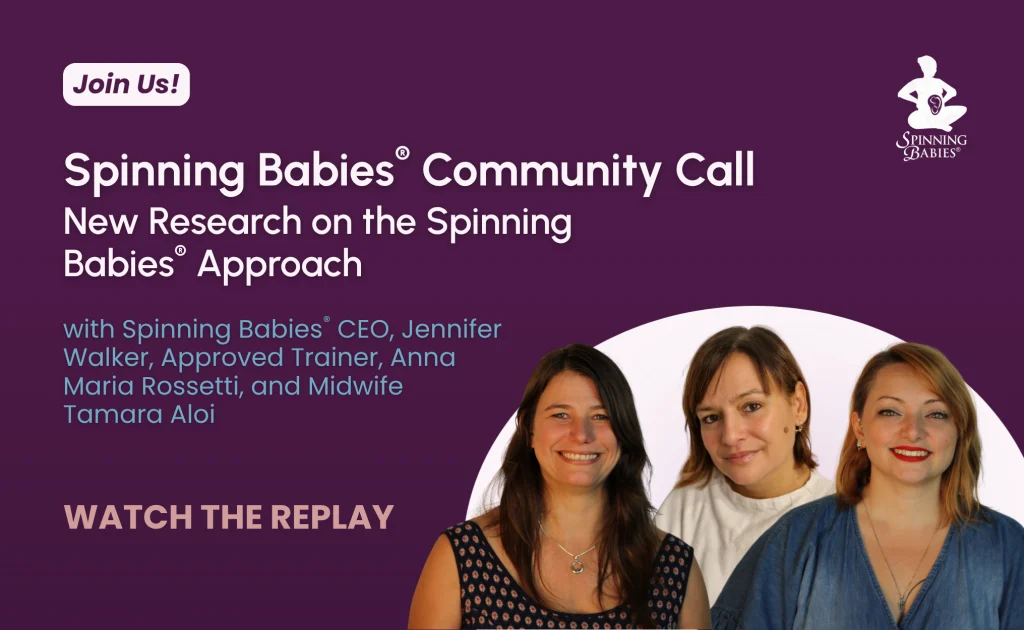
On November 5, 2025, the global birth community marked a significant milestone as Spinning Babies® hosted a virtual assembly that bridged the gap between intuitive clinical practice and empirical academic research. The event, held via Zoom, featured Spinning Babies® CEO Jennifer Walker, Approved Trainer Anna Maria Rossetti, and midwife Tamara Aloi. The primary focus of the discussion was a landmark study recently published in the European Journal of Midwifery, which stands as one of the first peer-reviewed investigations to directly examine the efficacy of the Spinning Babies® methodology in facilitating fetal rotation during labor.
For many birth professionals in attendance, the discussion felt like a long-awaited validation. For years, midwives, doulas, and obstetric providers have utilized the "Balance Before Force" philosophy and the Pelvic Levels Solutions™ framework in hospital and home birth settings. While these practitioners have consistently observed positive outcomes, the recent publication provides the clinical language and quantitative backing to support what has largely been anecdotal evidence. The virtual call served as a space for these professionals to align their real-world observations with the scientific data now entering the public record.
A Collaboration Rooted in Real-World Practice
The genesis of this study is a testament to the power of professional collaboration and the importance of practitioner-led research. Anna Maria Rossetti has long been a fixture in the discourse surrounding midwifery-led education and the promotion of physiological birth in Italy, particularly through her work at the Scuola Elementale di Arte Ostetrica (SEAO) and her dedicated role as a Spinning Babies® Approved Trainer. Her professional journey has frequently intersected with that of Tamara Aloi, a fellow midwife who shared her educational foundation.
The path to the study began when Tamara Aloi attended one of Rossetti’s Spinning Babies® workshops. Inspired by the techniques, Aloi began integrating the principles of fetal positioning and pelvic balance into her own clinical practice within a hospital setting. The tangible impact she witnessed—babies rotating into optimal positions and labors progressing more smoothly—became the catalyst for a formal investigation. By combining their shared expertise in midwifery and their commitment to physiological birth, the two practitioners sought to measure these outcomes systematically.
During the community call, Jennifer Walker framed the research within a much broader, global context. She noted that the study represents a significant step toward a paradigm shift in maternity care: a move away from the traditional reliance on "force" to resolve labor dystocia and toward a model that honors the natural physiology of birth. Walker emphasized that this approach necessitates a fundamental change in how providers view the fetus, recognizing the baby not as a passive object to be moved, but as an active participant capable of navigating the pelvic canal when provided with the necessary space and structural balance.
The sentiment among the attendees was one of profound consensus. As the chat function during the Zoom session became active, the feedback from participants echoed a common refrain: "Yes, this is what we see too." This collective acknowledgment underscored the gap that often exists between the "art" of midwifery—where practitioners rely on their hands-on intuition and observation—and the rigorous demands of evidence-based medicine.
What the Study Shows
The publication in the European Journal of Midwifery offers a rigorous examination of fetal rotation for babies in occiput-posterior (OP) and occiput-transverse (OT) positions. These positions, often referred to as "malpositions," are frequently cited as causes for prolonged or stalled labor, which can often lead to medical interventions such as cesarean sections or instrumental deliveries. The study found a statistically significant increase in rotation to the anterior position among birthing individuals who received the Spinning Babies® intervention compared to the control group.
This data provides a critical empirical anchor for the "Balance Before Force" framework. By focusing on the soft tissues of the pelvis and the movement of the fetus, the Spinning Babies® approach aims to resolve the mechanical obstructions that may prevent a baby from rotating. The study’s results suggest that by addressing these structural factors, providers can empower the birthing person’s body to function as it was designed, potentially reducing the need for invasive interventions.
For the international midwifery community, this study is a landmark. It moves the discussion of fetal positioning from the realm of alternative practice into the mainstream of obstetric research. By demonstrating that specific, non-invasive movements and positions can influence fetal rotation, the research provides a basis for hospital policies to evolve. It suggests that if providers are trained in these methods, they can offer more options to patients facing stalled labor, potentially shifting the focus from managing complications to facilitating physiological progress.
Continuing the Conversation
Recognizing that many members of the birth community were unable to attend the live event, Spinning Babies® has made the full recording of the discussion available for public viewing. The session is presented in Italian, with English captions provided to ensure accessibility for a global audience. For those seeking a concise summary, a separate video highlighting the key points of the discussion is also available in English.
The organizers provided guidance on how to access these resources, emphasizing the importance of inclusive communication. Viewers who wish to watch the recordings can enable captions through the video player settings. By selecting the "Subtitles/CC" option and using the "Auto-translate" feature, participants can engage with the material in their preferred language, ensuring that the findings and the dialogue are accessible to birth workers regardless of their native tongue.
The study and the subsequent community call represent more than just a successful research project; they signify a maturing of the profession’s approach to physiological birth. By fostering a culture where clinical intuition is paired with peer-reviewed validation, organizations like Spinning Babies® are helping to shape a future where maternity care is more evidence-based, less intervention-heavy, and deeply rooted in the understanding of the biomechanics of birth.
As the community continues to digest the implications of this research, the focus remains on the ongoing journey of learning and professional development. Whether working in a bustling hospital, a freestanding birth center, or supporting home births, the practitioners who participated in the call are part of a growing movement that seeks to redefine the standards of care.
Jennifer Walker concluded the session by expressing gratitude to the community. She highlighted that the exploration of new research, combined with the hard-won wisdom of real-world experience, is what drives the field forward. For midwives, nurses, physicians, and doulas alike, the conversation regarding fetal rotation and the efficacy of the Spinning Babies® approach is far from over. Instead, this study serves as a platform from which further research and improved clinical practices can grow, ensuring that the voices of those working on the front lines of birth are heard and supported by the highest standards of scientific inquiry. The dedication of individuals like Rossetti and Aloi serves as a reminder that the most impactful changes in healthcare often begin with the simple, courageous decision to observe, document, and share the realities of the birthing room.
