Navigating Social Media After
an Election: A Call for Grace, Inclusion, and the Parable of the Good Samaritan
Spending too much time on social media—particularly in the volatile windows immediately preceding or following a major election—is almost always a risky venture for one’s peace of mind. In the digital public square, algorithms often amplify division, outrage, and polarization, turning political discourse into a battlefield of extremes. Yet, even among the endless scroll of political commentary and partisan talking points, one occasionally encounters a jarring piece of content that stops a reader dead in their tracks, demanding deeper reflection.
This was the exact experience of one citizen a few days following the midterm elections, when a familiar name appeared on the feed. The user who shared the provocative post was an acquaintance from decades past, someone known through their shared connection at a hometown church. Attached to the profile was an image featuring a striking series of four United States maps, each visually communicating a vastly different political and cultural vision for the country.
The first map was colored entirely in red, symbolizing dominant conservative or Republican control. The second map was rendered entirely in blue, representing sweeping Democratic dominance. The third map featured a traditional American flag stretching seamlessly from coast to coast. The fourth and final map, however, was shrouded entirely in black, intentionally designed to mimic the stark visual branding and imagery associated with the Islamic State.
Accompanying the graphic was a blunt caption that laid bare the author’s polarizing worldview. "Some want this. Others want this. I want this," the caption read, pointing directly toward the patriotic map of the United States. It then pivoted sharply with an intolerant declaration: "Not this!," screaming in opposition to what the poster framed as an imminent Muslim takeover of America.
While the post did not explicitly name individuals, the timing and context made the underlying implication transparent. It was widely understood to be a direct and reactionary jab at the historic election of prominent political figures, specifically targeting the milestone achievement of Abdul El-Sayed, whose political ascent has frequently sparked intense national debates regarding representation, faith, and American identity.
For the observer reading the post, the encounter carried a profound layer of personal irony and theological dissonance. The man who shared the inflammatory image and the person reading it shared a foundational Christian faith, nurtured in the same spiritual traditions and sacred texts. As the reader processed the hostility embedded in the graphic, their mind immediately drifted to one of the most enduring and radical teachings of Jesus: the parable of the Good Samaritan.
In the biblical narrative, Jesus is posed with a fundamental question by an interlocutor seeking to test his doctrine: "Who is my neighbor?" Rather than offering a narrow, tribal definition that prioritizes those who share the same ethnicity, cultural background, or religious orthodoxy, Jesus chooses an unexpected figure as the hero of the story. He centers a Samaritan—someone belonging to a religious and ethnic community with deep historical divisions, animosities, and theological rivalries with the Jewish community of Jesus’s time.
The parable challenges listeners to expand their circle of empathy, tearing down societal walls and recognizing human dignity across deep cultural divides. For the churchgoer scrolling through Facebook, the lesson was clear and inescapable. It served as a timeless reminder that faith demands more than passive comfort; it calls believers to engage constructively with the world around them.
We are called to love our neighbors across religious, cultural, and political differences — but especially when those differences challenge us.
Reflecting on the digital confrontation, the observer distilled a vital principle that would guide their response: We are called to love our neighbors across religious, cultural, and political differences — but especially when those differences challenge us.
True empathy and compassion are easy to practice when dealing with those who mirror our own beliefs, values, and life experiences. The true test of character and faith arises precisely when individuals encounter worldviews, political ideologies, or religious practices that make them uncomfortable or challenge their preconceived notions of society.
Examining the rhetoric of the social media post, the observer noted a critical distinction that often gets lost in the heat of political and cultural warfare: the necessity of separating religious extremism from the everyday reality of ordinary Muslim neighbors. Millions of American Muslims live, work, raise families, and contribute to the fabric of society every single day. They are every bit as American as Christians, Jews, Hindus, secular citizens, and people of no faith at all.
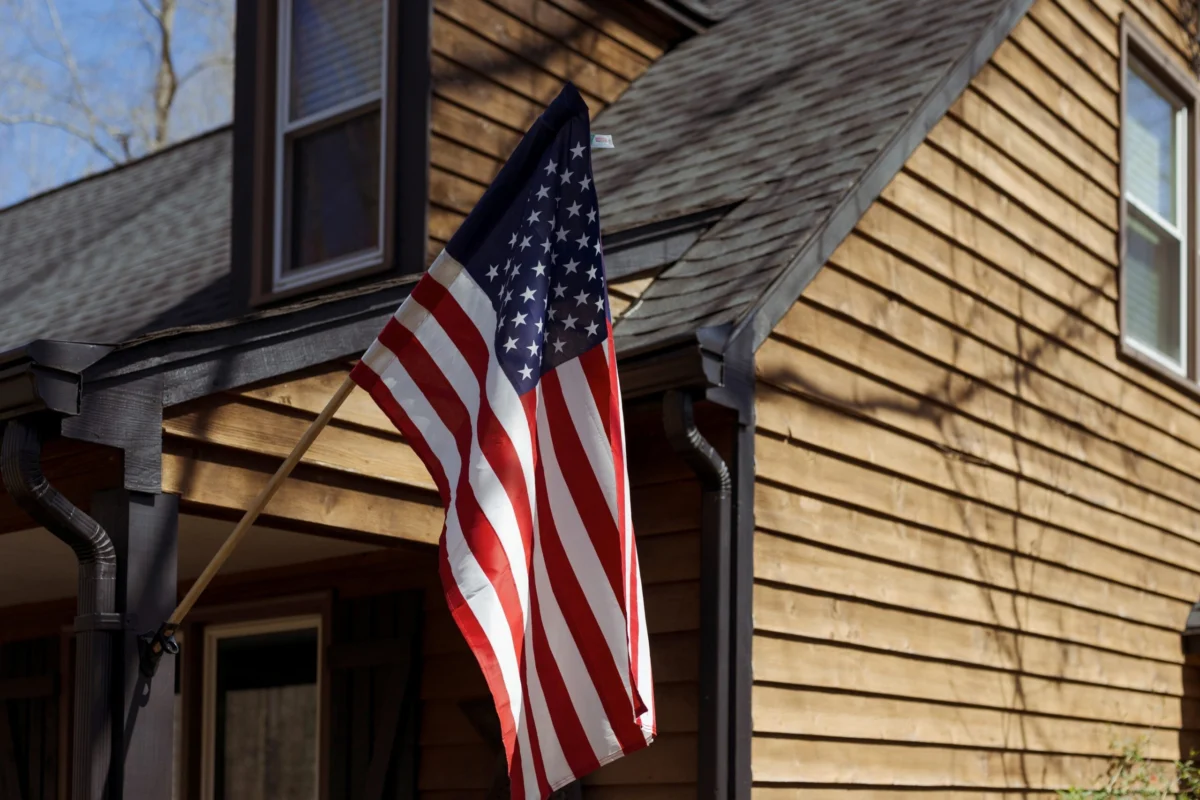
From this perspective, the central image of the American flag featured in the third map was not a symbol of exclusion, but rather a capacious banner broad enough to represent the rich tapestry of all citizens, regardless of their background. The national identity, at its best, is expansive rather than restrictive.
Choosing how to react to online hostility is often a delicate dilemma. Many social media users adhere to the unwritten rule that engaging with polarizing content is a futile exercise, a waste of energy that rarely changes minds and frequently devolves into digital shouting matches. As someone who typically avoids wading into hot-button controversies on public platforms, the observer initially considered scrolling past the post and letting it fade into the background noise of the internet.
However, the gravity of the rhetoric proved too significant to ignore. Deciding that silence in the face of bigotry is a form of passive endorsement, the decision was made to speak up. Rather than launching an attack, hurling insults, or attempting to publicly humiliate the acquaintance, the response was framed within the spirit of "calling in" rather than "calling out."
Drawing directly upon the shared Christian faith that connected them, the commenter crafted a thoughtful reply explaining why they viewed the image through a fundamentally different lens. The goal was not to "win" a partisan argument or score rhetorical points for an audience of online onlookers. Instead, the objective was modest yet ambitious: to offer an alternative perspective, inviting the friend to consider a more inclusive way of viewing Muslim neighbors and a more generous understanding of what it truly means to be an American.
This philosophy of engagement extends far beyond a single social media exchange and applies directly to the broader landscape of modern American politics. Looking back at recent electoral outcomes, the political landscape reveals deep fractures, yet it also highlights moments of unprecedented demographic and political evolution.
It is entirely possible to harbor deep disagreements with a candidate’s political platform, policy proposals, or partisan alignment while simultaneously acknowledging and celebrating broader democratic milestones. Modern elections have increasingly brought one of the most diverse groups of leaders into positions of power in U.S. history, bridging divides across traditional party lines.
Consider, for instance, the political landscape in Florida, where Republicans witnessed the historic emergence of leaders breaking racial barriers, or developments in states like Michigan, where figures such as Abdul El-Sayed achieved significant electoral victories. A citizen does not need to endorse every policy stance or agree ideologically with these leaders to recognize the profound historical significance and hopeful nature of their achievements. Representation matters in a pluralistic democracy, and witnessing individuals from diverse backgrounds ascend to positions of leadership is a testament to the ongoing evolution of the American experiment.
Ultimately, this experience encapsulates a broader hope for the future of the nation. The goal of a diverse republic is not forced uniformity or universal agreement on every political and cultural issue. Complete consensus is neither realistic nor necessarily healthy in a vibrant democracy characterized by free thought and open debate.
Instead, the true aspiration for America is learning how to coexist peacefully, loving one’s neighbors despite profound disagreements, and recognizing that individuals of vastly different faiths, non-faith backgrounds, races, and political ideologies are all essential characters in the ongoing American story.
The flag, in all its historic symbolism, remains expansive enough to cover us all.
