Navigating the Challenges of Homeschooling a Child Who Hates to Write: Expert Insights and Practical Strategies
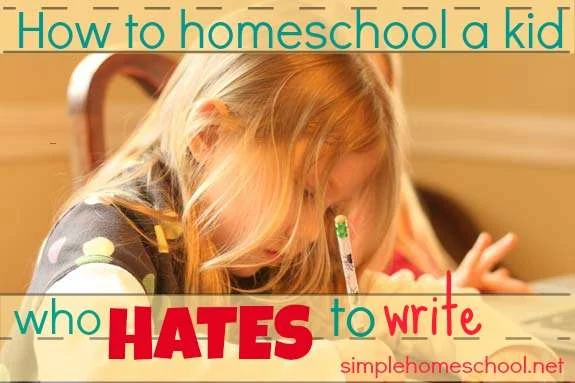
For many parents who have chosen the path of homeschooling, the daily routine brings a diverse array of triumphs and hurdles. Yet, few challenges test the patience of an educator quite like a child who deeply and fundamentally detests writing. While occasional resistance to schoolwork is a normal part of childhood development, educators and parents often encounter a distinct subset of students for whom the physical and mental exertion of writing even a single simple sentence feels akin to an insurmountable physical feat.
According to experienced homeschooling advocate and author Anne Bogel of Modern Mrs. Darcy, this aversion is not a matter of mere defiance or a temporary lack of motivation. For these children, writing is genuinely difficult, requiring an immense amount of cognitive and physical stamina, particularly when they are young and most notably among boys. When a child views holding a pencil and forming letters on a page as an exhausting trial, the friction can quickly spread beyond language arts, threatening to sour their perspective on education as a whole.
The primary danger in these situations, academic coaches and parents note, is that the intense disdain a child holds for handwriting can easily morph into a broader hatred of school itself. This unfortunate outcome happens with alarming frequency because the specific task the child hates most—putting pen to paper—permeates virtually every academic subject, from history and science to math and foreign languages. When every assignment requires the dreaded physical act of writing, the child may begin to associate learning with frustration, tears, and confrontation.

Fortunately, educators offer a reassuring perspective for families navigating this steep hill: the vast majority of children who struggle with writing eventually grow out of this aversion naturally, often without formal therapeutic intervention, by the time they reach the fourth or fifth grade. Until that developmental milestone is reached, however, parents and teachers face the delicate task of keeping the educational momentum alive while protecting the child’s enthusiasm for learning. Managing this transitional phase requires a blend of creativity, patience, and strategic academic adaptations designed to decouple the mastery of core subjects from the physical act of handwriting.
One of the foundational approaches recommended by experienced educators is to deliberately decouple the requirement of writing from subjects where the primary objective is simply to understand and master the material. In a standard classroom or traditional homeschool setting, worksheets and written assessments are often treated as the default proof of learning. However, for a child who struggles with the mechanics of writing, forcing them to write out every math problem, science definition, or history summary creates an unnecessary bottleneck that obscures whether they actually understand the concepts being taught.
To bypass this barrier, educators suggest shifting the delivery and demonstration of knowledge toward alternative formats, most notably verbal communication. Conducting work out loud allows a student to demonstrate comprehension without the agonizing physical slowdown of handwriting. Oral drills for math facts, phonics practice, language translations, fill-in-the-blanks, and verbal paragraph summaries enable children to engage deeply with the curriculum at the speed of their thoughts rather than the speed of their pencils. Whether working through a traditional worksheet verbally or replacing the paper entirely with discussion, the focus remains squarely on the intellectual content rather than the physical output.
When worksheets are still utilized, introducing tactile and gamified elements can transform an adversarial task into an engaging exercise. For instance, preparing answers in advance on small stickers allows a student to complete assignments by selecting the correct sticker and placing it in the appropriate spot on the page. This subtle shift turns a tedious writing exercise into an interactive matching game that feels distinctly different from traditional schoolwork. Similarly, transforming subjects like foreign language vocabulary, historical dates, and scientific classifications into hands-on matching activities allows children to engage with the material kinesthetically, bypassing the pencil entirely while reinforcing the core curriculum.

Another effective strategy for bridging the gap between a child’s advanced thoughts and their physical reluctance to write involves leaning heavily into the role of an administrative assistant for the student. Often referred to by homeschooling parents as playing "secretary," this dynamic allows the child to articulate their stories, scientific observations, or book summaries verbally while the parent records the words verbatim on paper. This method ensures that a child’s creative output and analytical thinking are not stifled by their current physical limitations with handwriting, allowing rich ideas to flow freely from mind to page without the frustrating physical barrier in between.
Writing mechanics extend beyond traditional essays and reports into foundational exercises like spelling practice, which can also become a source of daily friction. Rather than forcing a reluctant student to write spelling words repeatedly on lined paper, educators recommend substituting tactile alternatives. Allowing a child to spell out words using their finger in a shallow container filled with rice, sand, beans, or water provides the necessary repetition and kinesthetic reinforcement without requiring a single pencil stroke.
As children grow and their academic workloads increase, introducing alternative technologies early can also serve as a vital coping mechanism. Many families introduce typing programs to pencil-hating children around the age of seven, often at the children’s own request, though instructional programs can accommodate students even younger. Transitioning from handwriting to typing can dramatically alter a student’s relationship with composition, as the mechanics of pressing keys often feel faster, cleaner, and less physically taxing than forming letters by hand.
When writing tasks are unavoidable and must be completed by hand, equipping students with effective coping strategies becomes essential. Children often develop their own unique methods for self-soothing and managing the frustration associated with handwriting. Some students benefit greatly from incorporating physical movement into their routine, such as swinging, spinning, or sprinting down the driveway, creating a necessary physical release both before and after tackling writing assignments.

Ultimately, implementing these flexible approaches requires a modest investment of extra time and preparation from the parent or educator. However, for families watching a child maintain a genuine love for learning despite a temporary aversion to the physical act of writing, the extra effort is widely considered a worthwhile investment. By separating the mastery of knowledge from the mechanics of handwriting, educators can guide students safely through the primary grades until their physical stamina catches up with their intellectual capabilities.
