Rethinking How We Raise Lifelong Readers: Why Traditional Methods May Be Backfiring
Every
parent, educator, and caregiver shares a universal aspiration for the children in their lives: the desire for them to become genuine readers. The goal is not merely to cultivate literacy—ensuring children have the technical skill to decode words on a page—but to foster a deep, enduring relationship with literature. The ultimate aim is to raise individuals who not only can read, but who actually choose to read, carrying that passion into adulthood simply for the joy and enrichment it brings, rather than out of obligation.
Yet, a curious paradox often emerges among those who care most deeply about nurturing lifelong readers. Adults frequently approach children’s reading lives in a manner that is entirely antithetical to how real, adult readers actually experience and enjoy books.
Examining the typical trajectory of a child’s reading journey reveals a heavy apparatus of control and assessment. Adults routinely choose all the books for children, dictate how long they must sit and read, and subject them to interrogation-style questions designed to prove that the story was both read and understood. Beyond verbal quizzes, children are frequently required to write formal essays or book reports to demonstrate comprehension even further.
Underneath these well-intentioned practices lies an unspoken assumption: that by heavily regulating, testing, and managing every aspect of a child’s reading experience, adults are building a foundation for future literary habits. The expectation is that once these children grow up and no longer face external mandates, they will voluntarily choose to pick up a book for pleasure.
However, child development and literacy experts are increasingly pointing out the flaw in this logic. Coercion, rigid oversight, and constant evaluation rarely foster intrinsic motivation. Instead, they risk turning reading into a chore, an academic assignment, or a test of endurance rather than an immersive, pleasurable experience.
To shift this dynamic, advocates and educators are suggesting a fundamental reframing of the entire conversation. Rather than asking the common, anxious question of how to force or trick kids into reading, a more productive inquiry focuses on observing real, lifelong readers. By examining the behaviors, choices, and freedoms that characterize adult readers who genuinely love literature, parents and educators can begin to align children’s experiences with those same natural patterns.
This perspective invites a reimagining of the home and classroom environment, offering children more authentic opportunities to engage with books on their own terms. Rather than imposing rigid structures, the focus shifts toward autonomy, choice, and the pure enjoyment of storytelling.
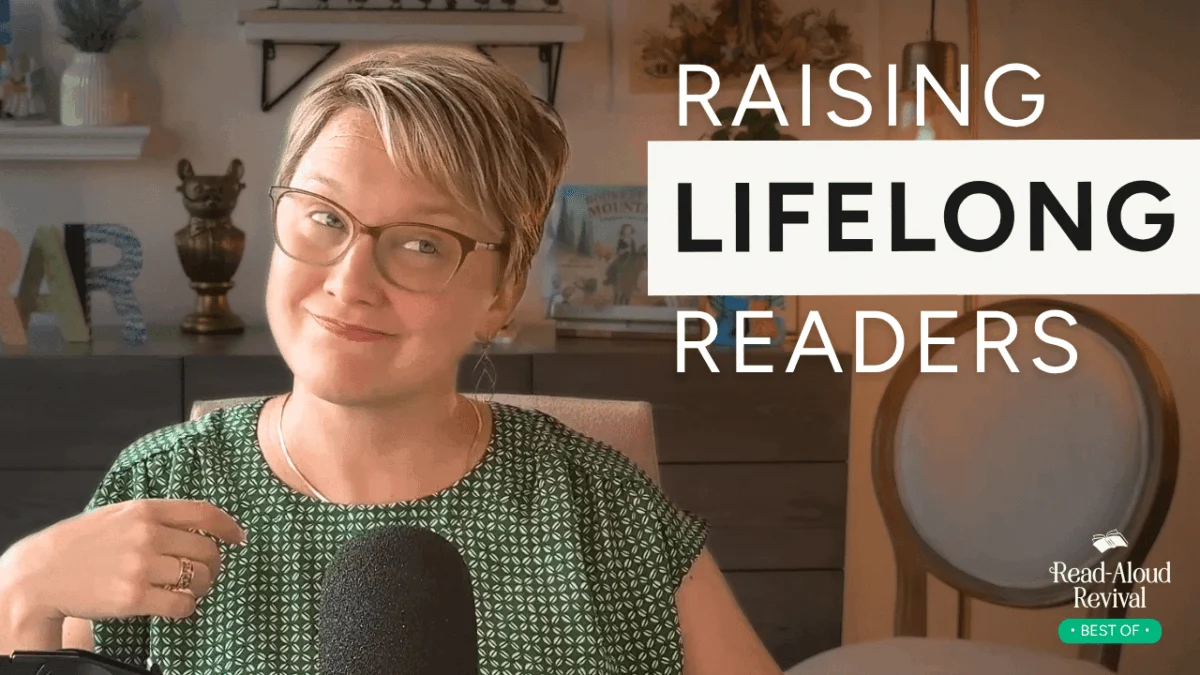
The discussion surrounding this shift in philosophy is explored in depth in a recent media episode featuring insights on nurturing lifelong readers. Through thoughtful conversation, the episode unpacks the contradictions inherent in modern reading habits and offers a fresh lens through which parents can view their children’s literary development. Listeners and viewers can explore these concepts further by engaging with the accompanying video content, which delves into simple yet powerful habits designed to foster a genuine, lasting love for books.
As conversations around education and literacy continue to evolve, the core message remains centered on trust and autonomy. By relinquishing a degree of control and allowing children to experience reading as an act of personal freedom rather than an academic hurdle, adults may finally bridge the gap between childhood reading assignments and lifelong literary enjoyment.
