Finding "Enough": How Homeschooling Parents Are Battling Burnout and Rethinking Productivity Standards
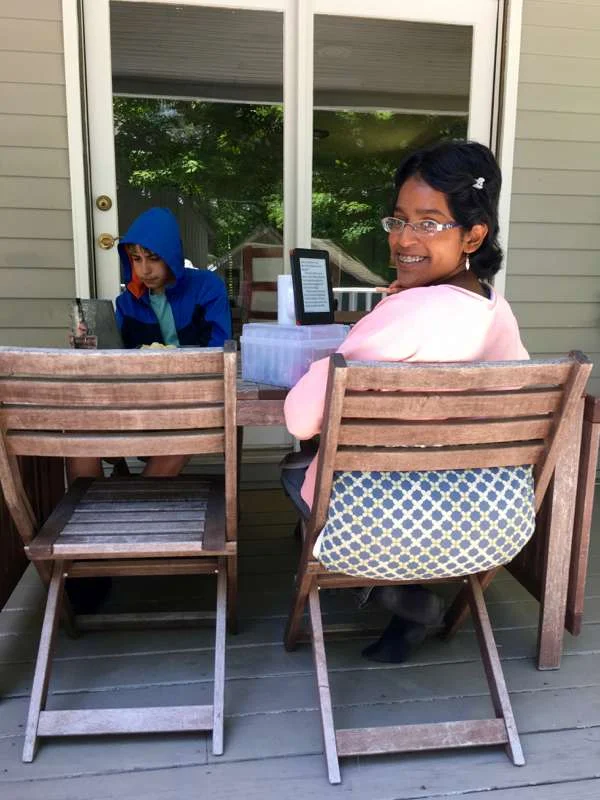
When veteran educator and author Jamie C. Martin posed a simple question to the readership of Simple Homeschool several months ago, she expected a wide variety of responses. She asked hundreds of parents to identify their single greatest challenge and source of anxiety when it comes to educating their children at home. What she discovered, however, was an overwhelming consensus that cut across geographic boundaries, family sizes, and educational philosophies. More than 75 percent of the replies pointed to the exact same persistent insecurity: the haunting, nagging fear that they are simply not doing enough.
It is a sentiment that keeps many parents awake during the quiet hours of the night. Despite the deep diversity among homeschooling families—ranging from eclectic learners and traditional classical homeschoolers to unschoolers and hybrid online students—the psychological burden remains remarkably uniform. As a new academic year gets underway, educators and parents alike are being forced to confront this elusive concept of "enough," examine why it exerts such a powerful hold over modern education, and explore practical ways to break free from the cycle of self-doubt.

To understand the psychology behind this anxiety, Martin suggests examining another domain where society fixates on the exact same word: personal finance. Across nearly every demographic, individuals rarely feel as though they possess an abundance of money. Regardless of household income levels, there is a pervasive tendency to hope for just a bit more to achieve comfort and security. Yet, extensive economic and psychological research into happiness and wealth has revealed a distinct threshold—often cited around the annual income mark of $75,000, where basic needs and standard desires are fully met. Beyond that specific financial baseline, accumulating additional cash does not yield a proportional increase in human joy or life satisfaction.
This economic parallel offers a vital lesson for educators: the concept of "enough" has a definitive set point. When a household falls below that threshold, the lack is felt acutely through stress and disorganization. However, continuing to pile on endless tasks, supplemental assignments, and rigorous extracurricular checklists yields diminishing returns. It fails to enhance the educational experience and instead breeds exhaustion. The ultimate objective for families navigating the homeschool journey is not endless accumulation, but rather identifying and settling into that optimal, balanced set point.
This realization challenges how educators approach planning. Families often spend countless hours reviewing digital spreadsheets, colorful planners, and curriculum catalogs at the desk, searching for a flawless routine. Yet, experience shows that the most meticulously designed schedule will never feel sufficient if the person implementing it does not believe in their own inherent worth. No checklist, no matter how comprehensive, can validate an educator’s value. Daily homeschool achievements and lesson plans do not define a parent’s character or determine their worth as a guide.

Interestingly, this anxiety is not exclusive to domestic classrooms. Public school educators wrestle with the exact same doubts. When Martin posed the question to a dear friend who teaches within the local public school system—asking if she ever felt like she was falling short—the response was immediate and affirmative. The teacher admitted to feeling that way constantly, explaining that whenever a student struggles to grasp a concept or faces personal hurdles, she always carries the lingering burden of wondering if she could have done more.
Recognizing that dedicated teachers—whether operating within a traditional institution or at a kitchen table—wrestle with these identical insecurities offers a profound sense of comfort. Furthermore, a closer look at the reality of traditional school systems reveals that they are far from the relentlessly efficient, high-output machines they are often imagined to be.
This perspective was recently reinforced when Martin observed her niece returning home from the first day of the eleventh-grade year. While reviewing the paperwork provided for an Advanced Placement Psychology syllabus, a surprising detail emerged on the reverse side of the document. Alongside the rigorous course objectives was a list of over a dozen feature films scheduled to be watched in class over the course of the semester as part of the formal curriculum, including mainstream titles like Groundhog Day and What About Bob.

The point of highlighting such a curriculum is not to critique public education, but rather to illuminate a stark reality: parents frequently hold themselves and their home environments to an unrealistic, impossible standard of productivity that does not actually exist anywhere in the professional educational world.
Instead of attempting to replicate a struggling institutional model within the domestic sphere, educators have a unique advantage that traditional schools can never match: the inherent power of home. Rather than transforming a living space into a rigid institution, parents are encouraged to calibrate their definition of "enough" around what their specific children genuinely need in any given moment, regardless of their age. For families who anticipate long-term homeschooling commitments, shedding artificial, arbitrary grade-level boxes opens the door to authentic, flexible learning tailored to individual pacing.
Conversely, for families who must keep the option open to reintegrate children into traditional schooling environments down the road, easing these fears of inadequacy can be achieved through slow, steady, and incremental progress in foundational subjects. Integrating even a modest amount of daily reading instruction, writing practice, and arithmetic can provide structural reassurance without overwhelming the daily rhythm.

Many families achieve this balance by utilizing structured workbooks corresponding to a child’s current academic level, completing a small handful of targeted pages each school day. By breaking larger assignments into manageable portions—sometimes even separating individual pages so that students are not overwhelmed by the visual expanse of an entire book—learners can approach their studies with confidence. Once these foundational tasks are completed, the remainder of the day can be filled with the rich, expansive experiences that make home education unique.
Rather than isolating children with endless schoolwork, the balance of the day can embrace the natural rhythms of family life: shared reading and discussions, cooking and baking together, navigating sibling dynamics, pursuing creative projects with building blocks, watching educational documentaries, playing strategic board games, and exploring passion-driven co-op classes. These are the elements that foster a lifelong love of learning and strengthen family bonds.
Ultimately, arriving at a sustainable definition of "enough" allows parents and children alike to step off the treadmill of hyper-productivity. By honoring the unique advantages of the home environment and releasing the pressure to match an impossible ideal, families can transform education from a source of chronic anxiety into a shared journey of discovery and connection.
