Roots of Resilience: How Muslim Families Are Shaping Communities Through Generational Activism and Faith
By Mahasin D. Shamsid-Deen
PETERSBURG, Va. — At the very foundation of the Islamic faith lies a profound call to activism. Muslims are taught in the Holy Quran to enjoin what is good and forbid what is harmful to mankind. Righteousness is defined within its verses in terms that are simultaneously psychological and physical—encompassing belief, charity, emancipation, the establishment of prayer, the fulfilling of agreements, and steadfast patience during adversity.
This ethos is encapsulated in Surah Al-Baqarah (2:177), which reminds believers: "Righteousness is not in turning your faces towards the east or the west. Rather, the righteous are those who believe in Allah, the Last Day, the angels, the Books, and the prophets; who give charity out of their cherished wealth to relatives, orphans, the poor, needy travelers, beggars, and for freeing captives; who establish prayer, pay alms-tax, and keep the pledges they make; and who are patient in times of suffering, adversity, and in the heat of battle. It is they who are true in faith, and it is they who are mindful of Allah."
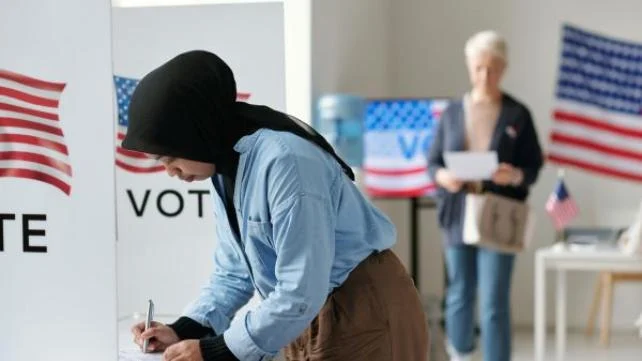
As the foundational unit of society, the Muslim family wields a powerful capacity to nurture the seeds of community and civic engagement. This localized stewardship carries transformative impacts not merely on the internal family dynamic, but outward into the broader neighborhoods and civic institutions they inhabit. When Muslim families engage actively in civic life, the result is a continuum of generational activism, positive cultural representation, and structural reconfiguration.
Recent data underscores the profound social utility of these efforts. A study by the National Institute of Health reported that children and teens involved in civic engagement develop significantly better emotional health, higher self-confidence, more positive family connections, a deeper appreciation for diversity, and superior problem-solving and collaborative skills. These young people carry these vital competencies with them into adult public service.
Moreover, underrepresented populations fundamentally reshape political narratives simply by showing up and maintaining active participation. Their consistent presence transforms media, cultural, and societal perceptions, directly challenging prejudice, which is most often rooted in ignorance and fear.
Laws within any society are forged by the people and their persistent advocacy. Accommodation, representation, and inclusion begin at local school board meetings, municipal town halls, and organizational collaborations, stretching all the way to the halls of Congress. When Muslims engage in their communities, the driving intention is to please the Creator by uplifting fellow human beings. That internal conviction radiates outward into tangible deeds that initiate the structural reconfiguration of societal values and laws.
Start at the Feet of Elders
A striking testament to this generational continuity unfolded in Virginia, where a profound observation emerged from an African American Muslim man who celebrated his 99th century of life the week before an election, alongside his wife, who turned 89 the month prior. The couple reflected on a century of lived experience, noting that American minorities—spanning racial, religious, and social lines—have continually faced various forms of voter intimidation or suppression for a hundred years. This ranged from systematic redistricting to outright violence, such as the 1955 murder of Lamar Smith, who was shot simply for urging African Americans to exercise their right to vote.
Despite surviving the oppressive era of Jim Crow laws, the couple lived long enough to witness monumental shifts in American society. They shared how they successfully raised their own children to be activists who boycotted, demonstrated, struck, and agitated against social injustice. That legacy was carried forward by their grandchildren, who focused on community education and coalition building, while their great-grandchildren navigate the digital world, utilizing social media platforms and digital organizing to make their voices heard.
Remarkably, these four distinct generations of continuous activism all began at the family dinner table through the shared transmission of history and lived experience.
Relate to the Quran
For many Americans who embraced Islam during the early to mid-20th century, the primary appeal of the faith lay in its strict adherence to Tawheed (the oneness of God), absolute equality, and uncompromising justice. Through Tawheed, believers found freedom from theological constructs that anthropomorphized the Divine. Equality was experienced organically through the profound universality represented within the diverse global and local Muslim community.
As these believers matured in their faith, they looked deeply to the Quran and found clear mandates requiring them to stand firmly for justice (4:35), serve as witnesses against injustice (4:135), and administer fairness even toward those with whom they disagreed (5:8). The vital connection between internal belief in the heart and outward action was firmly established, eventually becoming the traditional custom and lifestyle of the family unit.
Giving Charity, Working for Justice
The Quranic injunctions regarding charity detail giving generously out of one’s means to those experiencing hardship. When a Muslim family cultivates a familial tradition of community service and activism, these works are performed collectively. Activities range from participating in neighborhood environmental clean-ups to serving hot meals to the unhoused.
Reflecting on these principles, the senior Virginia couple noted that the concept of freeing the enslaved is not merely a relic of history. Today, it is mirrored by a political and legal system that penalizes citizens with economic, social, or legal statuses that strip away their ability to advocate for themselves. These marginalized, voiceless populations are often subjugated to systemic outcomes beyond their control. In their youth, this couple lobbied, petitioned, and marched to challenge and restructure those very root causes of injustice.
Family Town Hall
Muslim families frequently share quality time through daily prayers, but the conversations exchanged during family meals offer a vital platform to practice communication, organization, and democratic dialogue. The structure of a civic town hall—addressing old concerns, introducing new items for discussion, opening the floor for diverse perspectives, and building consensus—can easily be mirrored in the home.
By discussing current events in this manner and gathering perspectives from all age groups, families prepare their younger members for effective civic engagement. Demonstrating this practice firsthand, the elderly couple in Petersburg, Virginia, attended their local town hall meeting in October to present reasoned arguments for neighborhood and community improvements.
Continuous Engagement
The transformative restructuring of a society cannot be reduced to casting a ballot once a year or every few cycles; rather, it demands vibrant, consistent, and continuous action. True civic engagement and activism represent lifelong endeavors rooted in the understanding that service to humanity is a direct act of righteousness and a vital manifestation of faith. The legacy of steadfast effort and noble intention left by long-lived families serves as an enduring model for generations to come.
Mahasin D. Shamsid-Deen is the news curator and content manager for Muslim Network TV (MNTV) and a contributing writer for Sound Vision. She holds a master’s degree in English writing and has worked as both a high school and college ESL and writing instructor for more than a decade. Shamsid-Deen has numerous published articles, books, and essays, and is an award-winning playwright. She is currently completing her doctoral dissertation.
