New Peer-Reviewed Research Validates Spinning Babies® Approach in Fetal Rotation During Labor
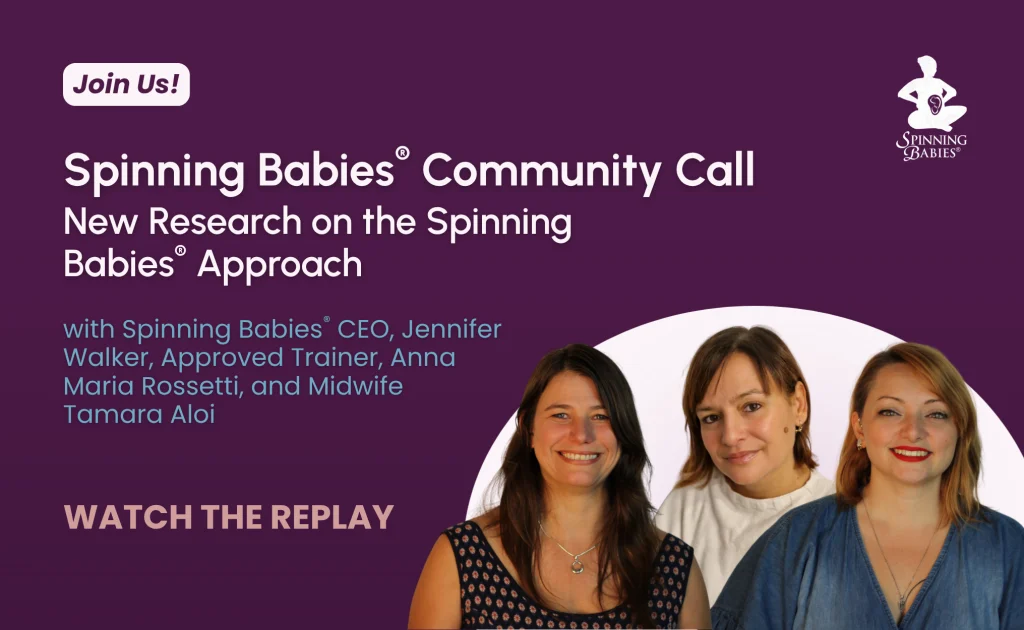
On November 5, 2025, the global birth community gathered for a significant virtual event hosted by Spinning Babies®. The session, conducted via Zoom, featured CEO Jennifer Walker, Approved Trainer Anna Maria Rossetti, and midwife Tamara Aloi. The primary focus of this international assembly was to discuss a landmark study recently published in the European Journal of Midwifery, which serves as one of the first peer-reviewed investigations specifically examining the efficacy of the Spinning Babies® framework in facilitating fetal rotation during the labor process.
For many professionals in the field, this publication represents a pivotal milestone. It provides formal, academic validation for the patterns and outcomes that birth workers have observed in clinical settings for years. By applying the principles of "Balance before Force" and the "Pelvic Levels Solutions™" framework, midwives, obstetricians, and doulas have long advocated for a shift in how we perceive the mechanics of birth. This new research offers a scientific bridge between those intuitive, observed practices and evidence-based medicine, providing a shared language for practitioners worldwide to discuss the complexities of fetal positioning.
A Collaboration Rooted in Real-World Practice
The study itself is the result of a profound professional collaboration. Anna Maria Rossetti, whose work at the Scuola Elementale di Arte Ostetrica (SEAO) in Italy is highly regarded, has been a central figure in advancing midwifery-led education and the promotion of physiological birth. Her partnership with Tamara Aloi is deeply rooted in a shared history; the two are contemporaries who navigated midwifery school together. Their enduring commitment to the physiology of birth has not only shaped their individual careers but has also driven their collective desire to bring structured, evidence-based improvements to clinical practice.
The journey toward this study began in a very practical, clinical environment. After attending one of Rossetti’s workshops, Aloi began to integrate the Spinning Babies® techniques into her own hospital-based practice. The results she witnessed—a noticeable difference in the progression of labors and the comfort of the birthing people she cared for—served as the primary catalyst for the study. Recognizing that their observations could offer valuable data to the broader medical community, the pair set out to formalize their findings, resulting in a project that emphasizes the importance of physiological support in modern maternity care.
During the community call, Jennifer Walker provided a broader perspective on the significance of this work. She noted that the research aligns perfectly with a growing global movement that prioritizes physiology over the premature application of force. This shift encourages practitioners to view the fetus not as a passive object to be moved by external intervention, but as an active participant capable of navigating the pelvic canal when provided with the correct environmental and structural conditions. The interaction in the Zoom chat throughout the call served as a powerful testament to this, with participants from various countries echoing a common sentiment: "Yes, this is what we see too."
What the Study Shows
The publication in the European Journal of Midwifery marks a turning point in the discussion of fetal rotation. Specifically, the study examined cases where the fetus was in occiput-posterior (OP) and occiput-transverse (OT) positions. In many clinical settings, these positions are often associated with longer labors and a higher likelihood of medical interventions. By applying the Spinning Babies® approach, which focuses on pelvic mobility and maternal positioning to facilitate the baby’s movement, researchers observed a significantly higher rate of rotation to the anterior position compared to control groups who did not receive these specific interventions.
This finding provides critical support for the "Balance before Force" philosophy. The core tenet of this approach is that by addressing the soft tissue and pelvic balance of the birthing person, practitioners can create the necessary space for the fetus to rotate and descend efficiently. The "Pelvic Levels Solutions™" framework provides a systematic way to identify where a baby might be encountering resistance and offers targeted movements to resolve those barriers. For years, this has been an anecdotal strength of the Spinning Babies® community; now, it is supported by a peer-reviewed dataset that highlights the efficacy of these methods in clinical labor management.
For providers, this study serves as a validation of the time and care they invest in supporting physiological birth. It reinforces the idea that clinical outcomes are not solely dependent on technological intervention but can be profoundly influenced by techniques that support the inherent capabilities of the human body. As the medical community continues to navigate the balance between safety and autonomy, research like this offers a pathway to integrating traditional knowledge with modern clinical requirements.
Engaging with the Research and the Community
Recognizing that many members of the global community were unable to attend the live Zoom session, Spinning Babies® has made the recording accessible for those who wish to delve deeper into the research and the discussion. The full recording is available for viewing, featuring the original conversation in Italian with English captions to ensure that the insights shared by Rossetti and Aloi are accessible to a worldwide audience. Additionally, a shortened version focusing on English-language highlights has been prepared to allow for a quick review of the key takeaways.
The organization has also provided clear instructions for those who wish to engage with these videos, specifically regarding the use of closed captioning and automated translation tools. By navigating the settings on the video player, viewers can enable captions and select their preferred language for real-time translation, ensuring that the dialogue remains inclusive and accessible across linguistic boundaries.
The event concluded with an expression of gratitude from the leadership team. The growth of the Spinning Babies® community is viewed not just as an increase in the number of trained professionals, but as a strengthening of a global conversation regarding the future of physiological birth. By fostering an environment where research, clinical experience, and real-world outcomes can be discussed openly, the community continues to move toward a model of care that honors the complexity of the birthing process.
For those who participated in the call, as well as for those engaging with the materials after the fact, the message remains clear: the integration of evidence-based, physiological techniques is essential to the future of maternity care. As more research emerges and more practitioners share their experiences, the "Balance before Force" approach continues to evolve, grounded in the reality of clinical practice and supported by a commitment to the well-being of the birthing person and the baby. The collaboration between Rossetti and Aloi stands as an example of how dedicated individuals, driven by their observations at the bedside, can contribute to meaningful, peer-reviewed advancements in the way we understand and support the birth process.
