Finding the Baseline: How One Mother’s Journey Through Wilderness Awareness School Redefined Community, Nature, and Modern Life
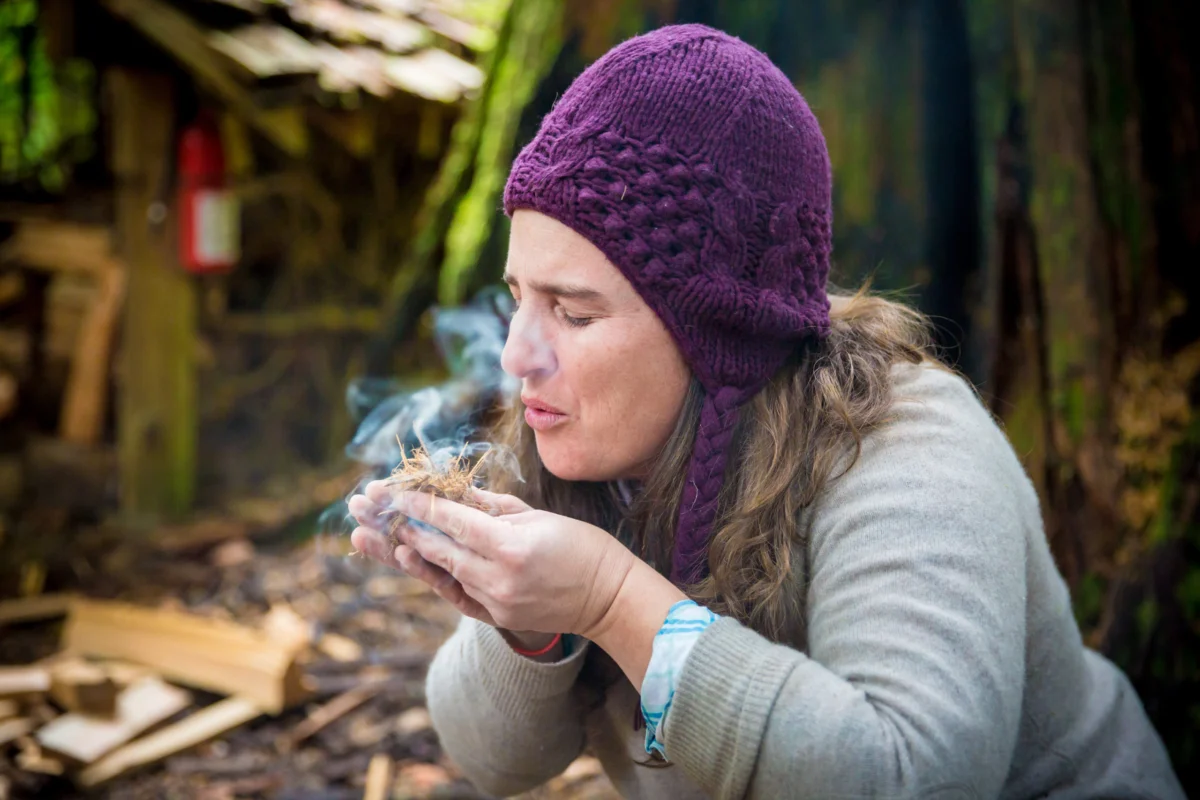
For many participants, the decision to enroll in deep nature connection programs comes with a persistent thought: Better late than never. This sentiment captures the personal journey of a long-time Seattle community member and mother whose ties to the Wilderness Awareness School began more than a decade ago. Reflecting on choices made along the way, she often contemplates how her life might have unfolded had she graduated from the institution’s transformative programs decades earlier. Yet, drawing inspiration from the poetry of Galway Kinnell—specifically his advice to trust the hours that have carried us up to the present moment—she recognizes that she entered the flagship Immersion program at precisely the right time in her life, arriving at a juncture when she was fully prepared to receive its teachings.
The deep relationship between her family and the school dates back to the summer camps of 2010. That initial seasonal exposure paved the way for a succession of outdoor experiences. Most notably, it included a pivotal year for her son, who participated in the Friday Community School program when he was in the sixth grade. At the time, he found himself woefully uninspired and underwhelmed by the rigid environment of his new middle school. Those Fridays spent out on the land provided a fierce, restorative joy that acted as a protective buffer, sustaining him through the remainder of the academic year. The experience proved vital for him, sparking a desire in the mother to seek out a similar transformative connection for herself. That personal calling ultimately led her to enroll in The Immersion at Wilderness Awareness School.
Through the curriculum of The Immersion, participants cultivate a profound shift in perception, encapsulated by a guiding awareness mantra: “Just because I didn’t know about something until now, doesn’t mean it wasn’t there all along.” This principle extends far beyond the natural world, serving as a lens for both ecological observation and human dynamics. It applies equally to a barred owl perched quietly on a limb directly overhead, a cougar silently stalking the edge of a woodland pond, a teenager subtly and desperately signaling for emotional attention, or a deeply ingrained, harmful pattern of privilege that someone gently, yet firmly, invites an individual to release.
Developing this level of sustained awareness is an ongoing practice rather than a static achievement. Graduates often emphasize that while they remain imperfect in their application, the training continually nudges them toward a posture of genuine curiosity and deep humility.
Following her graduation from The Immersion in 2018, her involvement with the organization deepened rather than waned. She transitioned into the Youth Nature Instructor Training program, stepped up as an active member of the school’s Equity Council, and dedicated her time as a volunteer for both summer and academic-year programs. Continuing this trajectory of service, she later joined the Adult Nature Instructor Training program to provide mentorship and support for incoming Immersion students, bridging her personal growth with a commitment to guiding others.
This sustained engagement raises a central question: what is it about this specific program and its surrounding community that exerts such a powerful, enduring pull? The answer, according to participants, lies in the dual pillars of awareness and camouflage.
In her daily life in Seattle, she navigates a diverse array of professional and civic circles. Her commitments are broad and demanding: she serves on the board of a local outdoor preschool, remains active as a philanthropist, participates in parent-teacher associations at her children’s schools, and sits on the equity committees of three distinct organizations. Furthermore, she maintains an active dedication to anti-racism work through continuous self-reflection, participation in white caucus groups, and engagement in mixed-race communities of practice and action. Above all else, she identifies as the mother of three emerging adults—young people who are best served when she practices active listening, sharp observation, and a parenting style focused on preparing them for, rather than shielding them from, life’s inevitable challenges.
Before experiencing The Immersion, her understanding of camouflage was strictly conventional, conjuring images of clothing patterned in splotches of green, brown, and tan, accompanied by similarly colored face paint caked onto the skin for tactical concealment. However, her perspective underwent a radical transformation through the curriculum. Today, she views herself as being in full, effective camouflage when she is dressed in an elegant black dress and wearing a string of pearls.
The mentors at Wilderness Awareness School reframed the concept of camouflage away from mere military utility and toward behavioral integration. They taught her that true camouflage is the art of blending in seamlessly with the baseline environment. Whether that baseline involves nesting quietly in a clump of sword ferns beneath a massive Western Red Cedar, sitting unobtrusively by a campfire surrounded by a circle of teenagers, or handling a salad fork with understated grace at a formal dinner inside the Four Seasons Hotel, the underlying mechanism is the same. By matching the baseline of the surrounding environment, an individual can accomplish meaningful, impactful work without causing disruptive concentric rings of disturbance.
Looking back on a decade defined by continuous learning, dedicated mentoring, and a supportive community found at the Wilderness Awareness School, she expresses profound gratitude for the path she and her son have shared, while looking forward with anticipation to the decade of growth still to come.
