Navigating the Educational Roadblock: How Educators and Parents Cope When Children Despise Writing
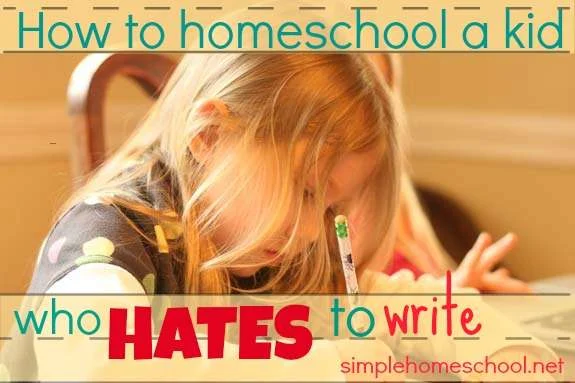
For many educators, parents, and academic coaches in the homeschooling community, a familiar and frustrating daily battle involves a child who utterly detests writing. While most children may occasionally sigh or express temporary reluctance toward completing an assignment, the aversion experienced by certain students goes far beyond normal disinterest. For these children, putting pencil to paper to write a simple sentence requires the physical effort and mental stamina of a grueling mountain ascent. This struggle is routinely accompanied by significant frustration, resistance, and emotional distress.
According to veteran educator and author Anne Bogel of Modern Mrs Darcy, these children are rarely faking or being deliberately defiant. Writing is genuinely difficult for them, particularly during their early developmental years and notably among boys. The core challenge for parents and instructors is preventing this specific academic hurdle from morphing into a broader, systemic hatred of school itself. Because handwriting and written assignments traditionally permeate nearly every subject—from history and science to mathematics and language arts—a deep-seated aversion to writing can easily poison a child’s entire educational experience.

Fortunately, child development experts and experienced homeschooling parents note that most children who struggle with writing eventually outgrow the hurdle, often without formal intervention, by the time they reach the fourth or fifth grade. Until that developmental milestone is reached, however, educators face the daily responsibility of helping both themselves and their students cope with the friction. Managing this phase requires intentional pedagogical adjustments designed to decouple a child’s mastery of core academic material from their physical ability to form letters on a page.
One of the primary strategies recommended by experienced instructors is the deliberate elimination of writing in every subject area except for actual writing instruction. When a child is learning mathematics, science, or geography, the ultimate educational objective is comprehension and mastery of the material, not the physical act of handwriting. By separating the two, teachers can ensure that a child’s reluctance to write does not impede their overall intellectual progress or stunt their curiosity in other subjects.
To bypass the physical barrier of the pencil, educators frequently turn to oral instruction and verbal testing. Instead of assigning traditional written worksheets, instructors can conduct oral drills for mathematics facts, phonetic exercises, language translations, and paragraph summaries. In many cases, a child can work through a standard worksheet entirely out loud, verbalizing answers to an instructor who listens and evaluates comprehension without demanding physical penmanship.

Other creative accommodations involve tactile and interactive methods that feel less like traditional schoolwork and more like play. For instance, teachers can prepare answers on small adhesive stickers in advance, allowing the student to physically select the correct sticker and place it in the appropriate spot on a worksheet. Similarly, transforming matching exercises into hands-on games allows children to connect Spanish vocabulary with definitions, historical dates with events, or states with capitals without ever picking up a pencil.
When it comes to fundamental practice routines, such as learning weekly spelling words, traditional paper and pencil methods can be entirely replaced with sensory alternatives. Instructors often encourage children to practice spelling by tracing words with their fingers through shallow containers filled with rice, sand, beans, or water. These tactile techniques reinforce muscle memory and spelling retention while completely removing the frustrating barrier of traditional handwriting.
For creative expression and subjects requiring longer narratives, adults often act as a physical secretary for the student. In this arrangement, the child dictates their thoughts, stories, or science observations aloud, while the parent or instructor transcribes the words onto paper. This method ensures that imaginative and articulate children are not held back by slow fine-motor skills, allowing them to get complex ideas out of their heads and onto the page without unnecessary strain.

As children grow and educational demands increase, many families choose to introduce typing instruction at an earlier age. While some students begin formal typing programs around age seven at their own request, children as young as five can successfully begin learning keyboard fundamentals. Transitioning to a digital format often bypasses the hand cramps and physical fatigue associated with holding a pencil.
When writing assignments are entirely unavoidable, equipping students with reliable coping strategies becomes essential. Experienced parents report that children who struggle with writing often benefit significantly from physical movement breaks, such as swinging, spinning, or running around outside before and after handwriting sessions. These physical outlets help students self-soothe and regulate their nervous systems before tackling a frustrating task.
Implementing these alternative methods undeniably requires a greater investment of time, patience, and preparation on the part of the parent or educator. However, proponents argue that the payoff is well worth the effort. By preserving a child’s love of learning and preventing academic burnout during the early elementary years, educators can guide students safely through a temporary developmental roadblock until writing eventually becomes a manageable and natural part of their education.
