From Burnout to the Backcountry: How One Startup Refugee Found Healing in Wilderness Rites of Passage
For Carlin Gettliffe, the breaking point arrived quietly, measured in the relentless blue glow of a computer screen and the mounting pressure of ten to fifteen phone calls a day. Immersed in the high-stakes, hyper-connected world of startup culture, Gettliffe was facing a condition familiar to many modern professionals: bone-deep burnout. The daily grind offered little room for reflection, movement, or genuine human connection, trading physical vitality for endless hours of digital optimization and strategic planning.
Seeking an escape from the relentless demands of the corporate ecosystem, Gettliffe made a dramatic pivot. He walked away from the startup world entirely, taking a leap of faith to enroll in a nine-month adult immersion program at the Wilderness Awareness School, nestled in the damp, towering forests of Duvall, Washington. It was an intentional step away from civilization, designed to trade the language of spreadsheets and project timelines for something far more ancient and grounding.
Tucked unassumingly toward the end of the curriculum, Gettliffe encountered wilderness rites of passage for the very first time. It was an experience that defied the polished, highly curated narratives often associated with modern outdoor adventure retreats. There was nothing "sexy" about the encounter; it was gritty, strange, and frequently uncomfortable, yet interwoven with unexpected moments of profound grace.
For days and nights on end, stripped of modern creature comforts and conveniences, the trappings of human schedule-keeping simply evaporated. Without plans, schedules, or strategic schemes to manage, Gettliffe’s relationship with time and space fundamentally shifted. Movement became instinctual. When the mountain air turned biting cold, his body simply moved to find warmth. When fatigue set in, he curled up directly into the deep, cushiony forest moss. He ate when hunger struck and paused motionless to listen when fear whispered in the dark. The body took the lead, communicating needs through the raw, unfiltered language of belly grumbles, shivering muscles, tension, and sudden release.
The sensory awakening of the immersion stripped away decades of conditioned urban habits. Gettliffe recalls laying his head down on the damp earth one night following a long, disorienting wander through total darkness. Hovering at the very edge of sleep, a subtle sound caught his attention: a family of mice nestled somewhere in the nearby grass, quietly chattering and cooing to one another in the dark. Paralyzed by a sudden fear of disturbing them, he lay completely still, listening to the tiny, microscopic symphony for what felt like hours. In that suspended moment, he felt mysteriously linked to those unseen, wild beings by an intricate, invisible universe of sound.
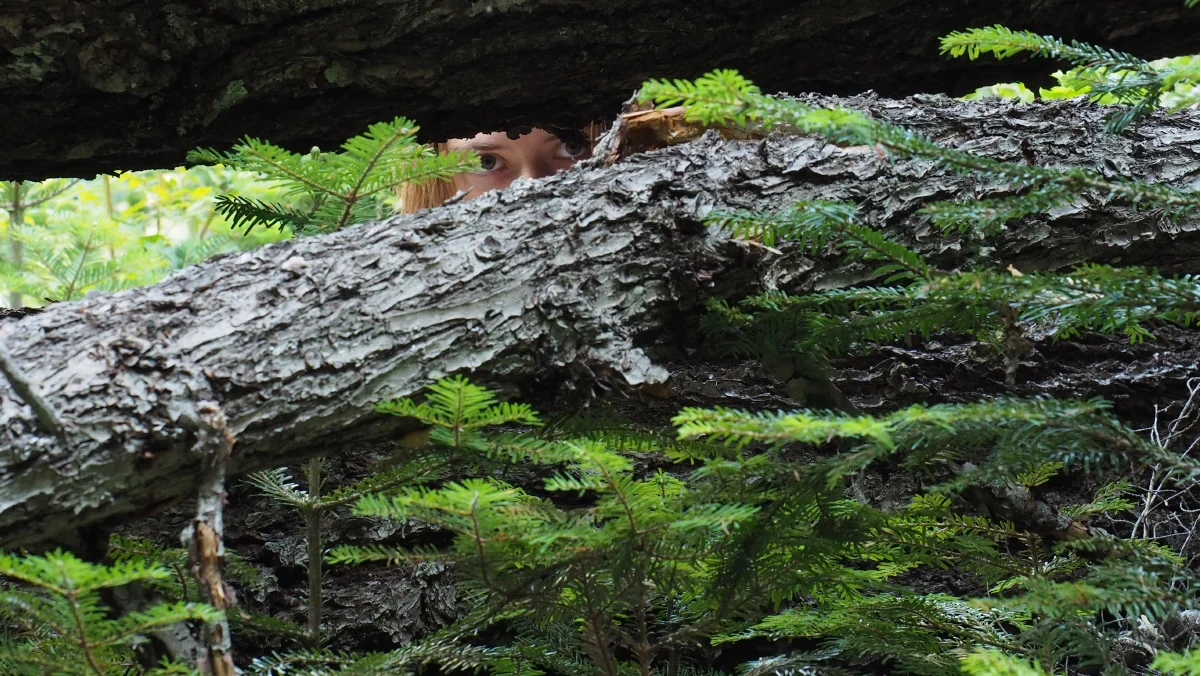
Yet, this return to the wild was not merely a series of serene pastoral moments. In other instances, the human psyche felt as though it were free-falling through an infinite, empty void. Long-held personal stories, cultural assumptions, and psychological safety nets cracked and crumbled under the pressure of isolation. Fear seized him with a firm grip, shaking his foundational assumptions about safety, control, and identity. He was swallowed, both literally and figuratively, by the enveloping dark of the forest.
Yet, it was precisely through allowing himself to be swallowed—by letting go of the desperate, exhausting struggle for control, comfort, and intellectual understanding—that genuine space finally opened for something else to emerge.
Articulating that "something else" resists easy categorization or simple journalistic translation. Words like presence, resonance, or the profound vulnerability of belonging only scratch the surface. It would be just as accurate, Gettliffe notes, to simply call it an oak tree, an owl, water, and wind. More than anything, the experience felt like a remembering—a long-awaited, ancestral return to what poet Mary Oliver famously termed "our place in the family of things."
True wilderness rites of passage, as Gettliffe discovered through his prolonged exposure to the elements, are rarely tests of physical endurance, survivalist skill, or athletic prowess. Instead, they serve as tests of a human being’s fundamental willingness to be pierced—by beauty, by grief, by fear, and by the stark realization of how deeply humans need the natural world, and how much the natural world, in its own unspoken way, needs us in return.
Through this process, participants uncover something far more precious and enduring than individual ambition, career recognition, or professional validation: a deep-seated sense of kinship and devotion to life. This devotion does not stem from a heady, intellectualized notion of "doing good" or checking philanthropic boxes. Rather, it is firmly grounded in the dirt caked under one’s fingernails, the resilient moss pressed against one’s cheek, and the haunting, nocturnal call of a saw-whet owl cutting through the midnight air.
This kind of profound cultural and psychological remembrance resists commodification. It cannot be added as a notch to a belt, listed as a credential on a resume, or leveraged as a marketable skill in the modern gig economy. It will not lead to personal riches, and it certainly will not bring fame. It may not even make an individual happier in the traditional sense; in fact, stepping past the threshold of modern distraction frequently connects participants with grief and sorrow they did not even realize they were carrying. It is, at its core, an existential trust fall that offers no guarantees, no legal sureties, and no neatly paved paths.
What it does deliver, however, is a demolition of modern illusions. It shatters the persistent cultural lie telling individuals that they are meant to navigate life entirely on their own. It dismantles the ego-driven assumption that a personal scramble for comfort, status, and control constitutes the center of the universe. Most importantly, it cures the modern malady of insignificance, replacing it with the undeniable truth that every human being is desperately needed by the living world.
When these foundational truths finally land, they arrive simultaneously as a profound, physical relief and as a rigorous new call to devotion. Human beings carry a first and final responsibility to the intricate web of relationality and ecological wholeness that both contains them and depends upon them for survival.
Rites of passage, viewed through this lens, are the ancient mechanisms by which human cultures tend to that vital web and repair its continually fraying edges. They are designed not for the isolated individual, but fundamentally for the village. Ultimately, what a fractured culture needs most are individuals capable of living within a difficult paradox: recognizing themselves as tiny, insignificant drops in a vast, indifferent ocean, while stubbornly continuing to do the specific, localized work life is calling them to do, fully aware that they are irrevocably woven into the entirety of existence.
Drawing on these transformative personal lessons, Gettliffe has channeled his experiences into a professional offering. Shadowcraft stands as his personal ode to the enduring power of rites of passage—an invitation and offering to the wild spirit waiting to meet individuals willing to step off the beaten path. True thresholds in modern life are remarkably rare, and in the span of an entire lifetime, a person might consider themselves fortunate to cross a small handful.
In a contemporary culture that routinely fails to recognize, witness, or honor moments of genuine import and psychological transformation, the Shadowcraft Intensive offers a deliberate alternative. It provides modern participants with a rare structured opportunity to cross a threshold in, with, and in direct service to community and the more-than-human world.
Carlin Gettliffe serves as the lead instructor for the Shadowcraft Intensive, as well as the Sacred Dark weekend program offered through the Wilderness Awareness School.
