Following the Pioneer Path: A Family’s Historic Road Trip and Virtual Tour Through the World of Laura Ingalls Wilder
For generations, the beloved Little House book series by Laura Ingalls Wilder has captured the imaginations of young readers and adults alike. For Jamie C. Martin, editor of Simple Homeschool, these classic tales of frontier survival, family resilience, and pioneer life were more than just childhood stories—they were a lifelong inspiration. Now, Martin is turning a childhood dream into reality by taking her family on an extensive summer road trip across the American Midwest to retrace the exact footsteps of the famous pioneer author.
Rather than traveling by covered wagon, the family plans to pack into a modern minivan to visit the authentic historical sites and museums dedicated to the Ingalls and Wilder families in Wisconsin, Minnesota, and South Dakota. Recognizing that thousands of homeschoolers, literature enthusiasts, and families share a deep affection for the series, Martin is also opening up the journey to the public, designing a comprehensive virtual field trip that allows children and parents to explore these historic locations from the comfort of their own homes and classrooms.

The journey spans multiple states and decades of American history, capturing the real-life migrations that inspired some of the most enduring works of children’s literature.
Stop 1: Pepin, Wisconsin
The journey begins where Laura Ingalls Wilder’s story started: the Big Woods of Pepin, Wisconsin. Born there in 1867, Wilder immortalized her earliest memories in Little House in the Big Woods. Interestingly, literary historians note that while this book portrays her earliest childhood home, the Ingalls family actually lived here twice, and many of the specific memories shared in the text took place after the family returned from the Kansas prairie.

Today, visitors exploring the area via digital mapping or in person will find that the dense forest of the 19th century has largely given way to open land, with only a scattering of original trees remaining. However, a meticulously crafted replica cabin stands at the site, accompanied by a public picnic area for travelers. A historic wayside cabin in the region commemorates the setting that launched a literary legacy, offering a tangible connection to the pioneer days of log construction, hunting, and surviving harsh northern winters.
Stop 2: Independence, Kansas
Moving south and west, the second major stop on the itinerary takes travelers to the sweeping plains of Independence, Kansas. In 1869, the Ingalls family relocated to this region, settling on land belonging to the Osage Nation after receiving word that the territory would soon be opened for white settlement.

The trials and triumphs of this era were captured in Little House on the Prairie. After a single year marked by incredible perseverance through illness, isolation, and growing cultural tensions between Native Americans and encroaching settlers, the family was ultimately forced to leave Kansas.
Today, the site hosts a replica cabin furnished precisely as Wilder described in her writing. Nearby stands a hand-dug well originally constructed by Charles "Pa" Ingalls, serving as a silent testament to the exhausting physical labor required to establish a homestead on the untamed prairie.

Stop 3: Walnut Grove, Minnesota
Following their departure from Kansas and a brief return to Wisconsin, the Ingalls family made another major westward move in 1874, settling along the banks of Plum Creek in Walnut Grove, Minnesota. Their initial shelter on the prairie was a humble sod house for the winter before Pa Ingalls constructed what Laura fondly remembered as "the wonderful house"—the largest permanent home her family had lived in up to that point.
While the original dugout and frame structures are no longer standing, the natural landmark of Plum Creek remains largely unchanged, offering modern visitors the chance to wade in the same waters where Laura and her sisters played. Walnut Grove also features a dedicated historical museum housing artifacts from the era. Notably, the very church bell that Pa famously donated his precious shoe money to purchase still hangs proudly in a local town church.

Stop 4: De Smet, South Dakota
After experiencing agricultural setbacks and hardships in Minnesota and a brief stop in Iowa, the Ingalls family pushed further west to De Smet, South Dakota. Pa Ingalls accepted employment with the expanding Chicago and North Western Railway, marking the final permanent move of Laura’s childhood until she and her sisters left home as adults.
De Smet holds a monumental place in the Little House chronology, serving as the setting for By the Shores of Silver Lake, The Long Winter, Little Town on the Prairie, These Happy Golden Years, and The First Four Years. It was here that the family endured the legendary blizzards of the winter of 1880–1881, immortalized in The Long Winter. De Smet was also the backdrop for Laura’s formative years, her courtship with Almanzo Wilder, and the beginning of their married life together. Today, the town preserves several historic structures and surveyor’s houses connected directly to the family’s history.
Stop 5: Malone, New York
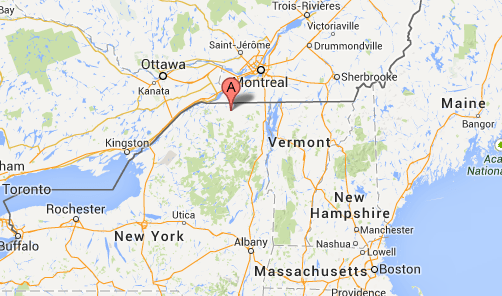
While the core series follows the Ingalls family, the pioneer experience is expanded through the eyes of Almanzo Wilder, who grew up on a prosperous farm in Malone, New York. Born there in 1857, Almanzo’s robust childhood of agricultural labor, horse training, and hearty farm life was chronicled by Laura in Farmer Boy.
Almanzo’s family maintained the New York farm for nearly two decades until devastating crop failures ultimately forced them to pull up stakes and migrate west to Minnesota, where Almanzo and Laura’s paths would eventually cross. The original stone house and surrounding farm buildings still stand in Malone, carefully restored to reflect the mid-19th-century period described in the book.

Stop 6: Mansfield, Missouri
The final chapter of Laura Ingalls Wilder’s life unfolded far to the south in Mansfield, Missouri, where Laura, Almanzo, and their daughter Rose relocated in 1894 in search of a fresh start in farming. Over nearly two decades of hard labor, they transformed the rugged landscape into Rocky Ridge Farm.
It was within the walls of the comfortable white farmhouse they built on the property that Wilder penned every single volume of the Little House series. The location now operates as a comprehensive historic home and museum, housing invaluable artifacts such as Pa Ingalls’s original fiddle, alongside Laura’s kitchen and parlor.

The site also bears witness to the family’s later years, including the nearby "Rock House" site built by their daughter Rose as a gift to her parents. Though Laura and Almanzo briefly lived in the more modern home, they ultimately felt homesick for the simpler Rocky Ridge farmhouse and returned to spend the remainder of their days there.
Reflecting on the enduring appeal of her books later in life, Wilder once wrote about the permanence of family values amidst a changing world: "It has been years since I beat eggs with a fork or cleaned a kerosene lamp. Many things have changed since then, but the truths we learned from our parents and the principles they taught us are always true. They can never change."
Through family road trips, digital resources, and the continued popularity of her writing, those pioneer principles continue to reach new generations of readers and travelers today.
